Introduction
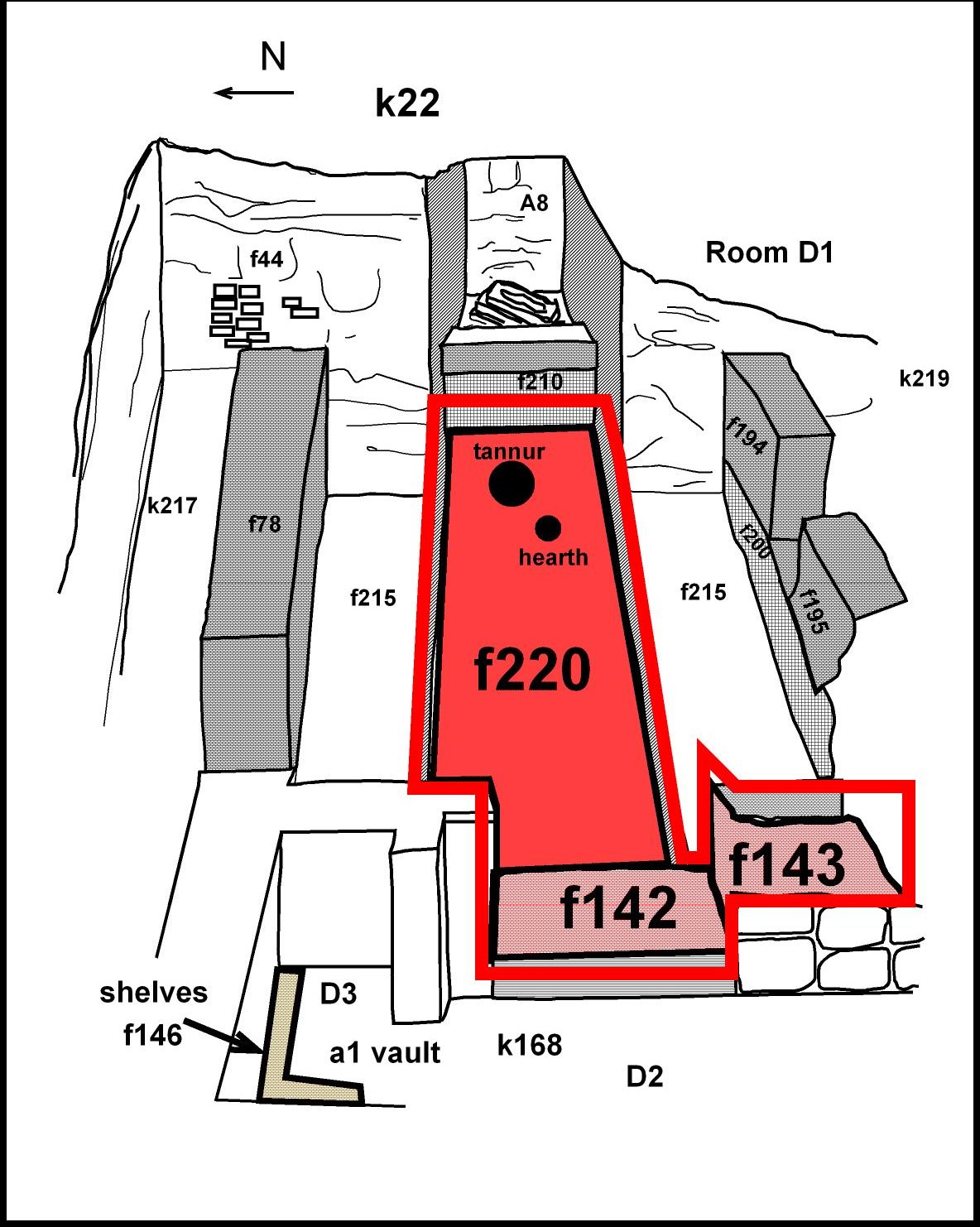
The type of contact described as “to abut or to bond with” is the most common in unit A6, representing approximately 39%. This is attributed to the fact that unit A6 constitutes an important part of the royal palace, as most of it was designated as the palace kitchen, a space that remained in use into later periods with changes in its functional nature. Consequently, many of the features consist of accumulations abutting walls or mud-brick elements that form platforms and thresholds within the building.
Abuts
Abuts in unit A6 is relatively high, reaching about 34%. One of the clearest examples is accumulation f220, which consists of hard pinkish-brown deposits with gray patches and includes carbonized material, as well as pottery sherds and bones; this accumulation directly abuts threshold f142. Another example is threshold f142 itself, which consists of a line of mud-bricks extending from north to south along doorway a4 and abuts wall f143.