Back to top: Music
Music at Urkesh
We do not live apart from the places to which we belong; rather, we carry them within us as an extension of our memory, our history, and our sense of belonging. And when music finds its way into an archaeological site, it does not merely fill the silence, but awakens what lies dormant within the stones, turning ruins into whispered voices that travel across time.
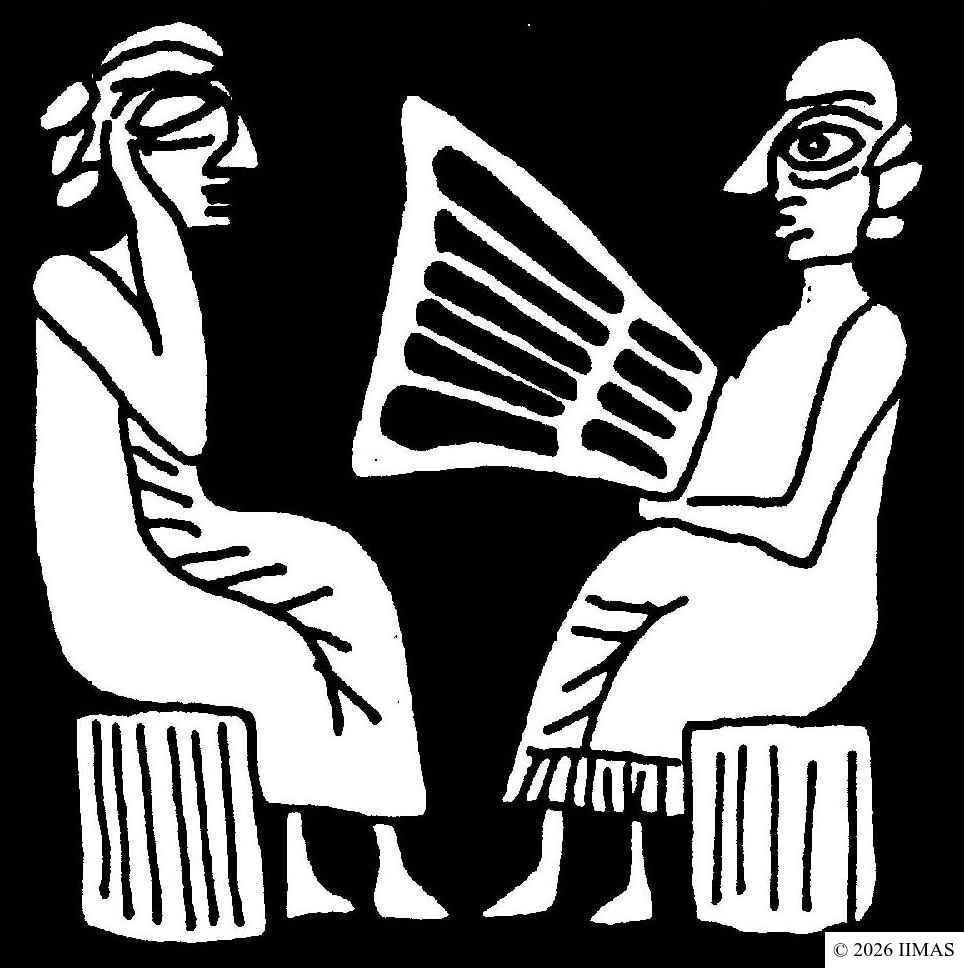
At Tell Mozan, music is not simply a passing performance, but rather a call that connected what once was with what is. The ruins seemed to breathe again, as melodies wove threads of life through their ancient walls, where the echo of the past met the pulse of the present in a single moment rich with meaning, as though the place itself were reawakening its ancient sonic memory, a heritage that belonged to a civilization in which music was already deeply embedded within cultural expression in the wider ancient Syrian world.
Thus, music was no longer just sound, but became an unseen bridge carrying us toward the spirit of the place. It reconnects us with its story and grants us the ability to perceive new meaning within it, even amid uncertainty. In such moments, heritage rises from its stillness to affirm that beauty does not fade, and that hope can be born even from the midst of ruins.
|
|
Back to top: Music
July 2018
This was our first experience with Classic Music School from Qamishli, when the orchestra held an exceptional concert on the monumental stone staircase of Urkesh. The music they chose for this event, written by Merle Isaac, is entitled Gipsy Overture see video.
Despite the heat and thirst of a scorching summer afternoon, I and Mohammad Ismail, the conductor of the orchestra, were eager to make this performance happen. The younger players were not tired at all; on the contrary, they were even more enthusiastic than we were. The size of the instruments—such as the flute, guitar, cello, clarinet, and electric bass—meant nothing to them and did not seem to tire them, even though some of them were the same size as their instruments, or perhaps even shorter than the violin bow.
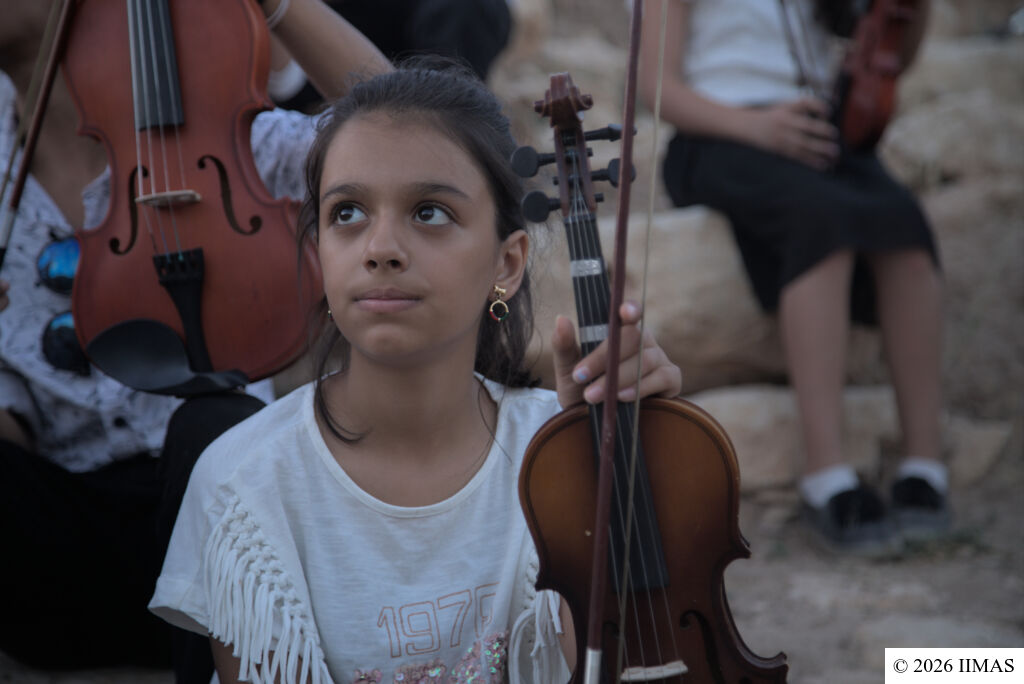
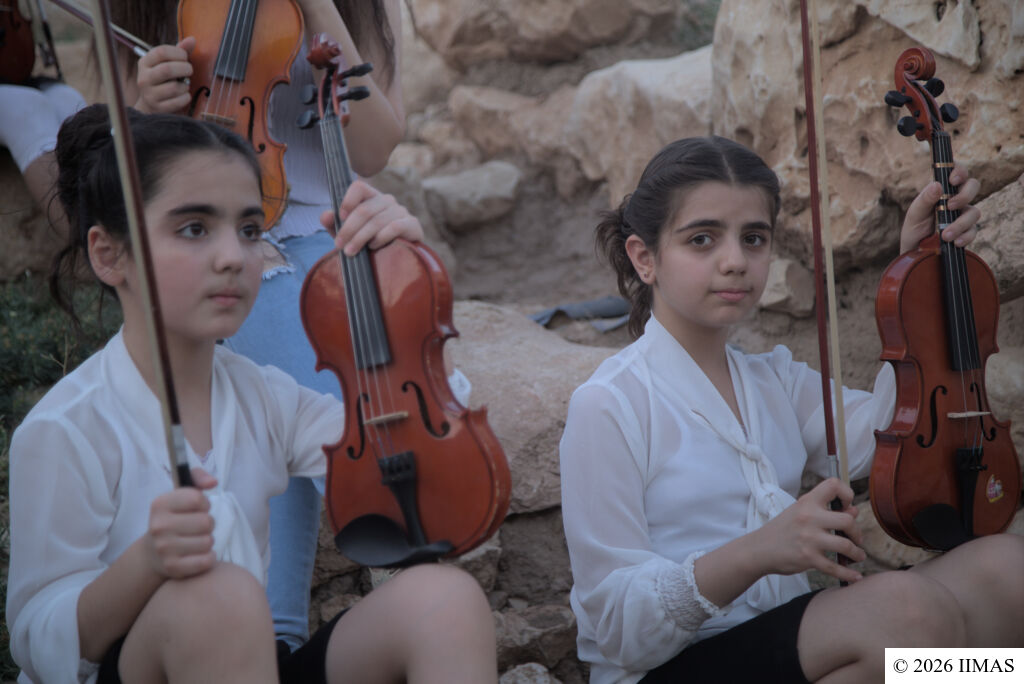
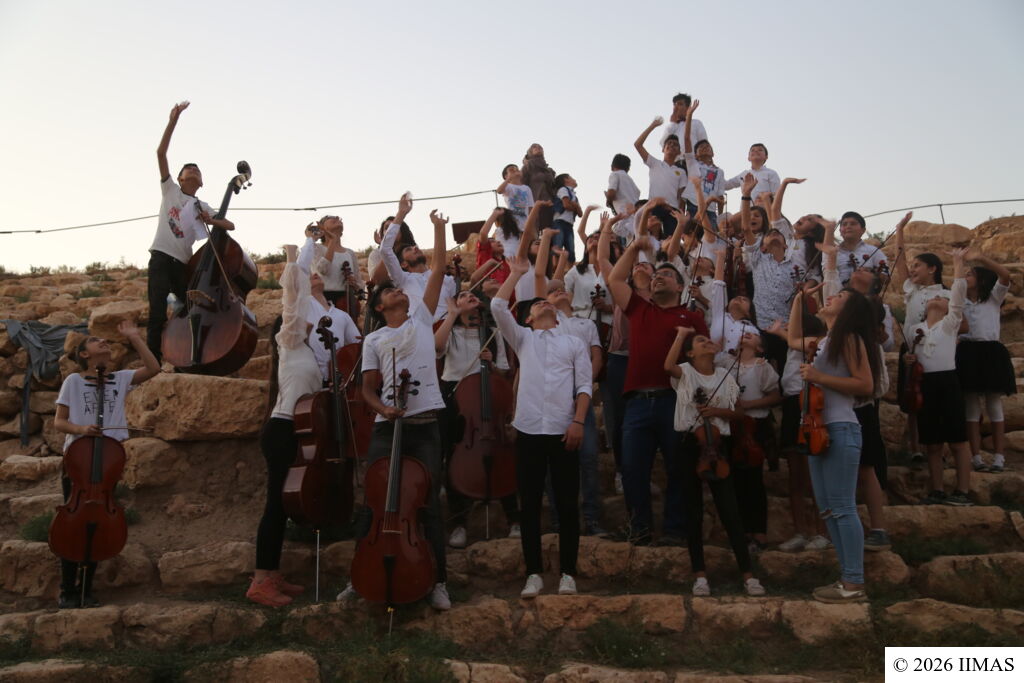
Although they all wore the same uniform, their ages varied widely; some were very young, yet they truly excelled. Afterward, we remained in contact with them, and they eventually became part of our school-projects here.
Back to top: Music
October 2022
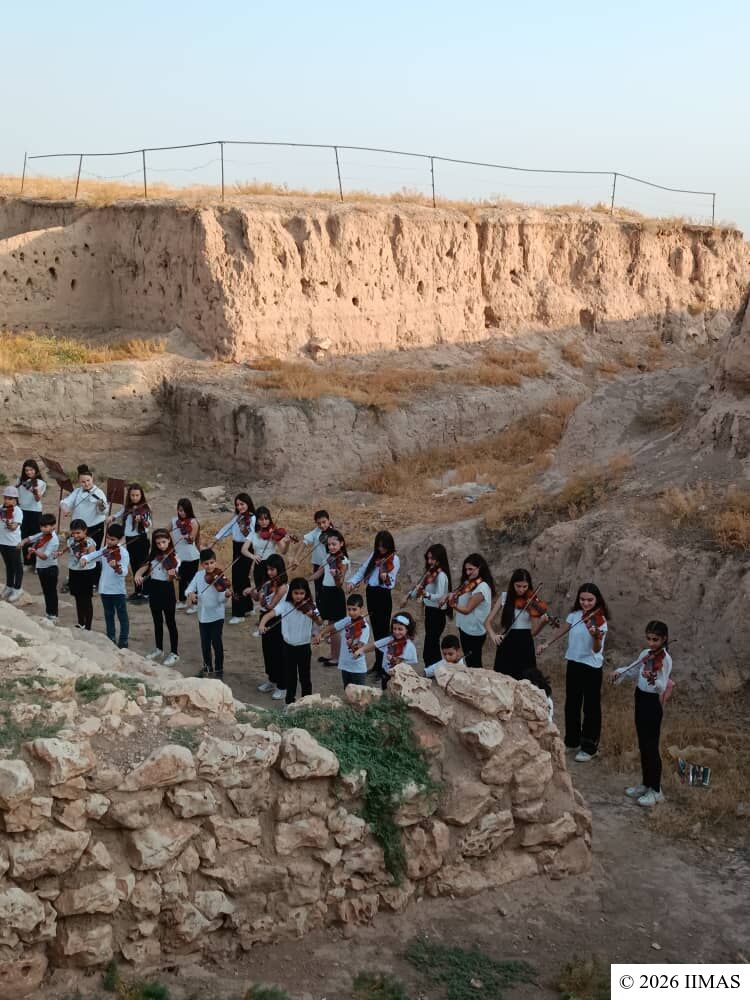
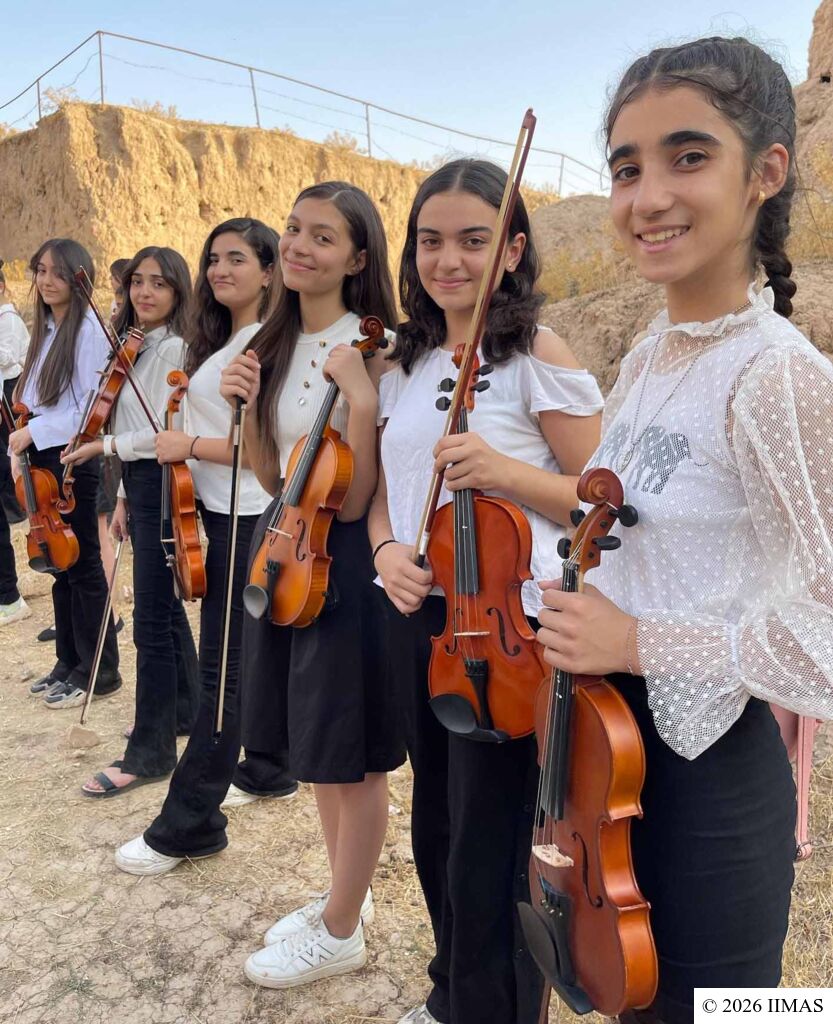
As a second visit to Urkesh, the Classic Music School in Qamishli organized an exploration trip for thirty violin students to Urkesh, under the supervision of maestro Mohammad Ismail. The aim was to get to know the archaeological site and create harmony between music and the place, where the students performed some musical pieces.
Back to top: Music
October 2023
I am the dove, I am the white dove, I fly in the sky, searching for you above and below, are words used in the context of a popular Kurdish folk song performed at weddings and celebrations, carrying a simple symbolic meaning connected to love and longing.
Two young students from the Classic Music School in Qamishli Delvin and Roni performed the music of this song on the steps of the Temple of Urkesh, accompanied by several of their fellow musicians see video. In that moment, applause blended with music and rhythm. The sound of the Tanbur intertwined with the Violin in the space of the archaeological site, creating a sonic dialogue that merged the lover’s search for the beloved across sky and earth with the staircase itself, which symbolized an ascent toward the heavens and an encounter with the divine.
Although the event was spontaneous, it acquired a special significance, as the temple steps were used in ancient times as a ritual ascent path to the heaven.
Back to top: Music
March 2026
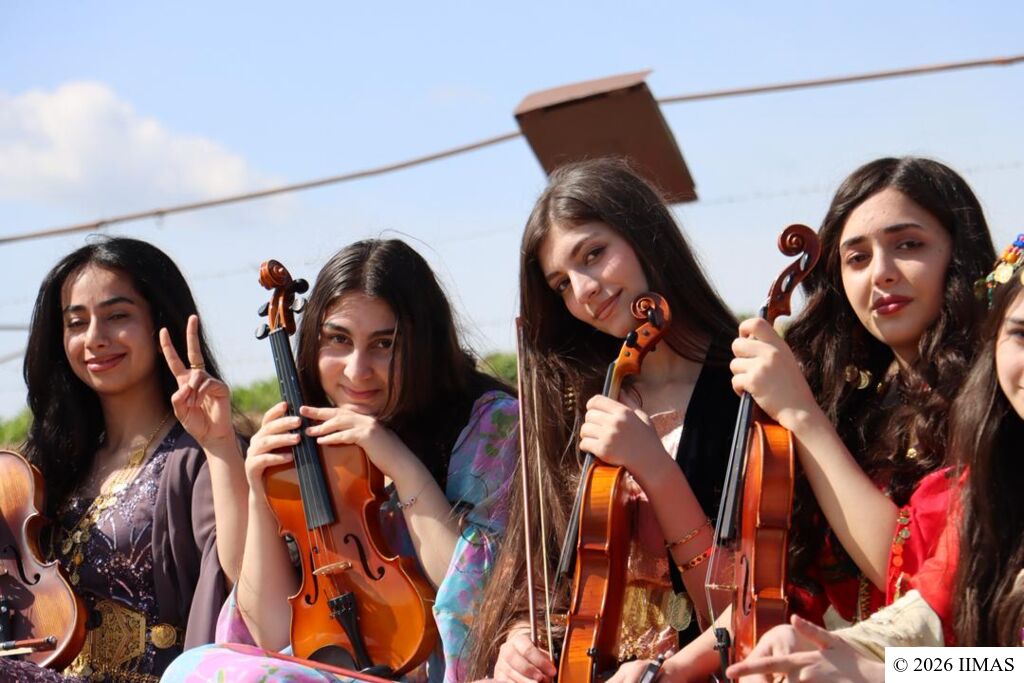
After a period of tension and instability, live music rose again at Tell Mozan, weaving a sense of hope among the stones of the archaeological site and reviving the connection between the place and its cultural heritage. This took place within the atmosphere of the Newroz spring celebrations, observed on March 21 each year, when people head out into nature and various regions host musical performances and traditional dances.
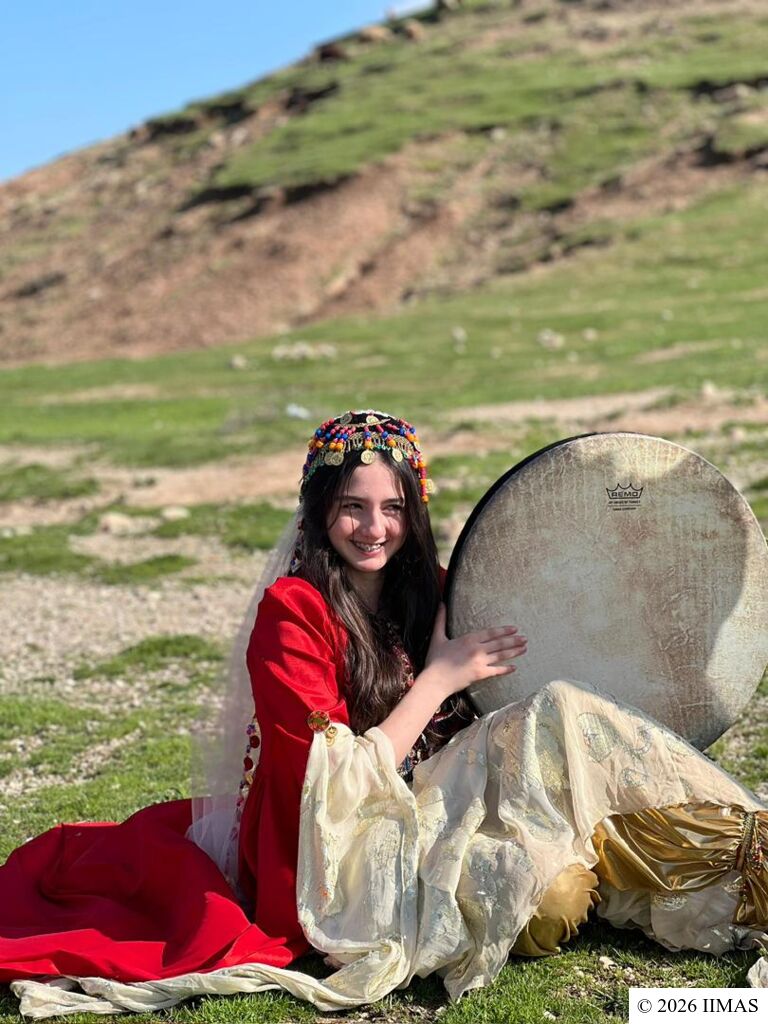
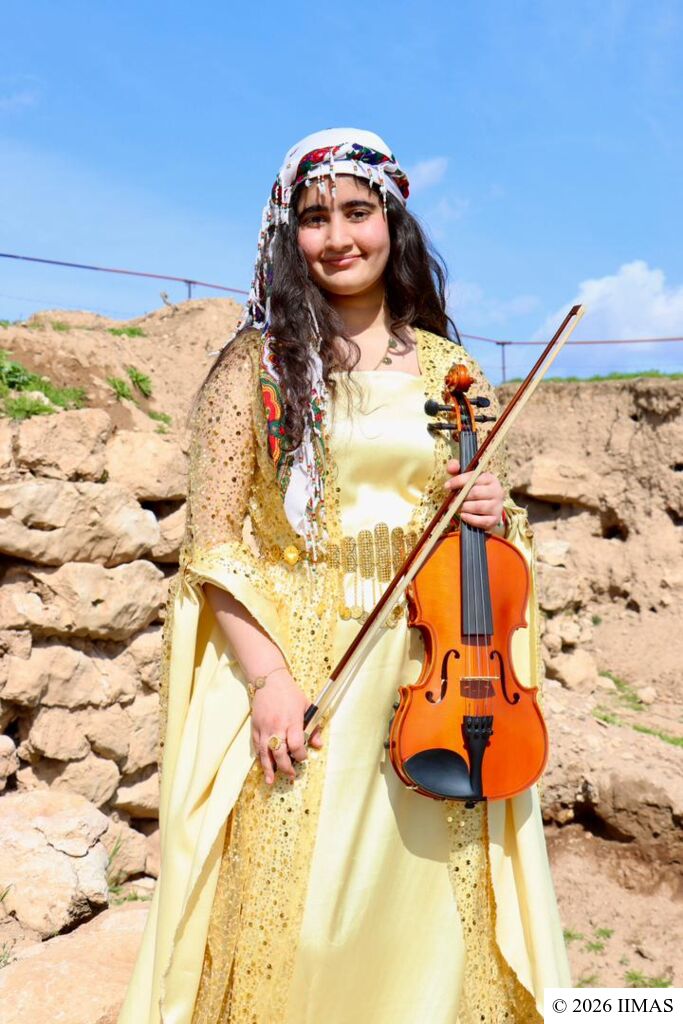
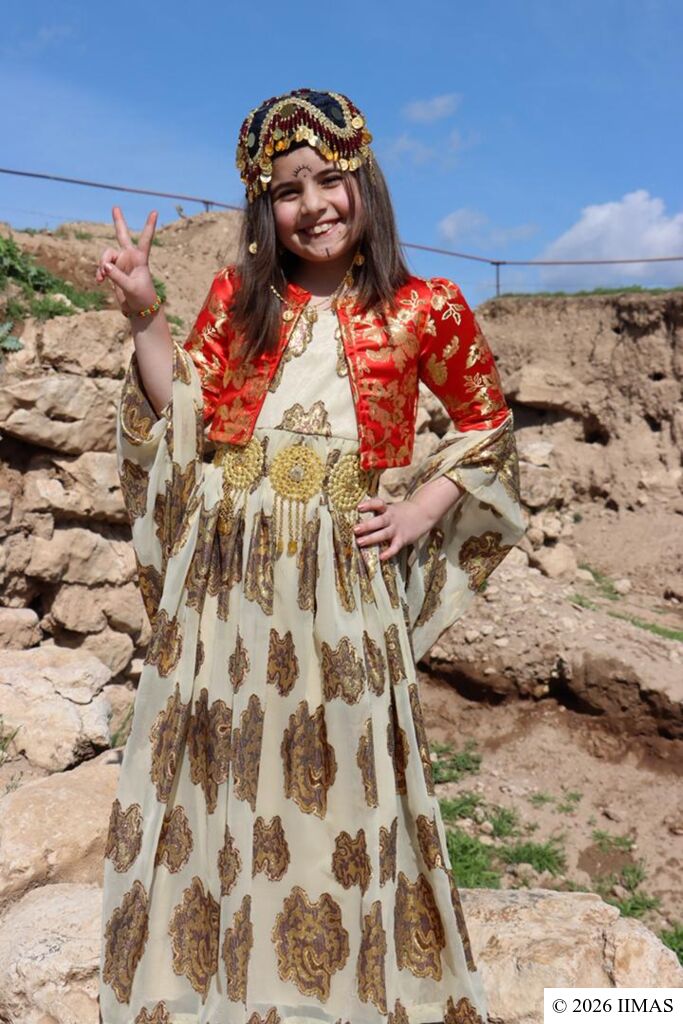
A number of young musicians from Classic Music School in Qamishli participated in a live performance inside the archaeological site of Tell Mozan, presenting pieces inspired by local folk music. They appeared in traditional dress; the girls wore Kras û Xeftan, while the boys wore Shal û Shepik, using instruments such as the Violin and the Def see video. In that moment, it felt as though the past was being revived; the site was no longer merely a place to visit and observe its architectural remains, but rather a space to reawaken music in which its ancient inhabitants were once skilled thousands of years ago, later spreading it to distant places such as Ugarit.
Back to top: Music