[I removed emplcmnt under TOC, because you already have the info in the left bar
[I have added instead extract-TOC at the top, so we have a second left bar
I chamged #### abd ##### to ###
I changed #### and ##### to ###
Back to top: Amorphous amassment
Amorphous amassment
The elements that define a feature as amorphous amassment is the random alignment of inclusions. The collapse of a building, the dump of material in a pit are examples of this category. More than 10% of the features excavated in J6 belong to this category.
Back to top: Amorphous amassment
Dump
A dump is an intentionally discard of debris. In J6 two dumps were recorded.
dump 1 is the first feature in J6 that is related to human activity, the matrix and components within the layers change drastically. Within the features included in dump 1 we observed the masive presence of pebbles, animal bones, large stones and pottery sherds. The dump was found in all the southern portion of J6 (k65, k74, k75, k84, k85, k86, k87), under accumulation 1.
|
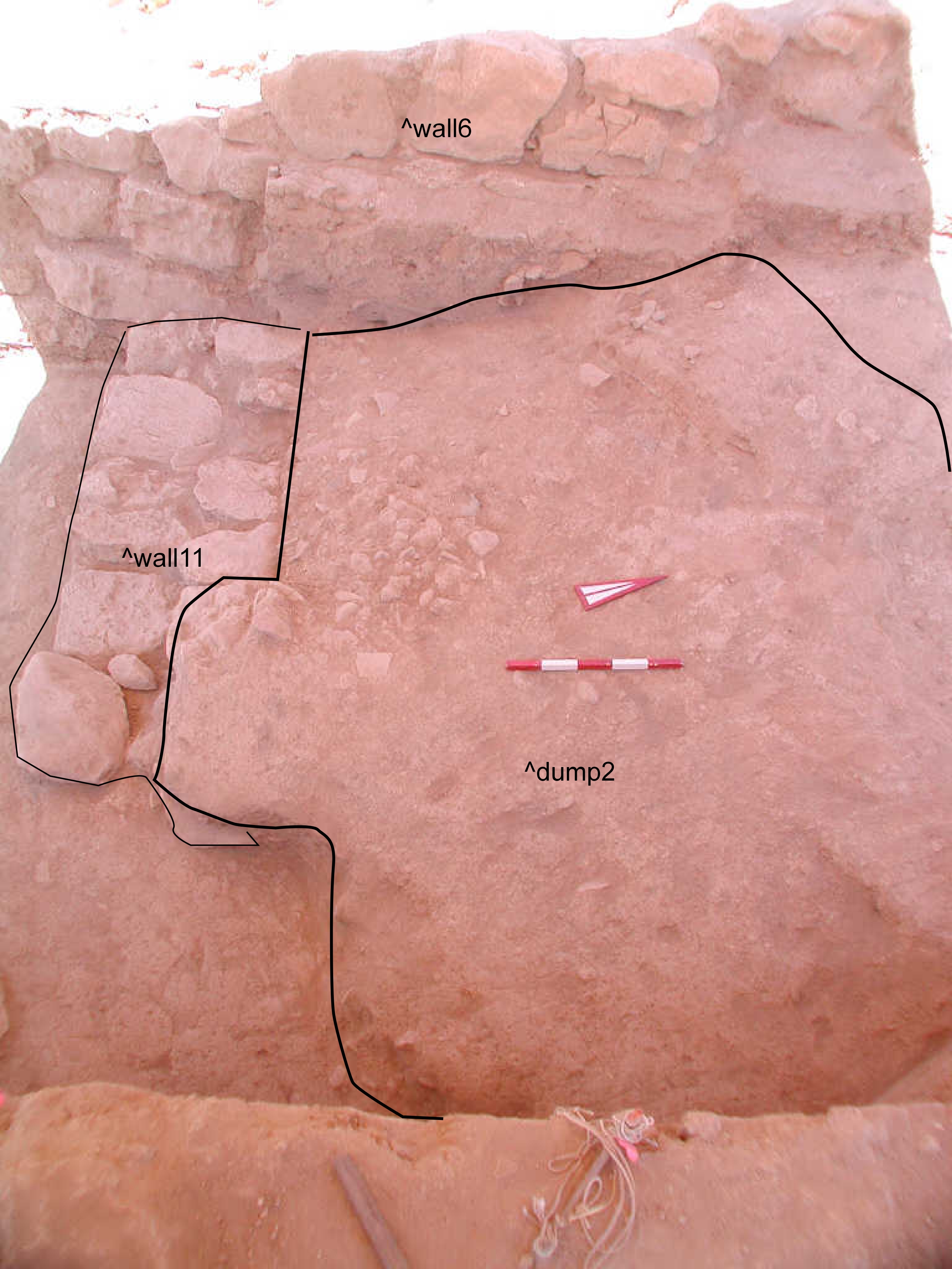
A second dump is represented by dump 2. It is characterized by a soft red soil with ash lenses and a large presence of pottery, clay lumps with seal impressions, tannur pieces, objects, bones, and kilin waste. This dump was found directly under pit f192 and covered wall f227 and glacis f300 (see also section w206). |
|
Back to top: Amorphous amassment
Fills
Four pits were excavated in J6. In this section I describe the fills. For the pit cut see section pit cut
| feature | description | special objects | image |
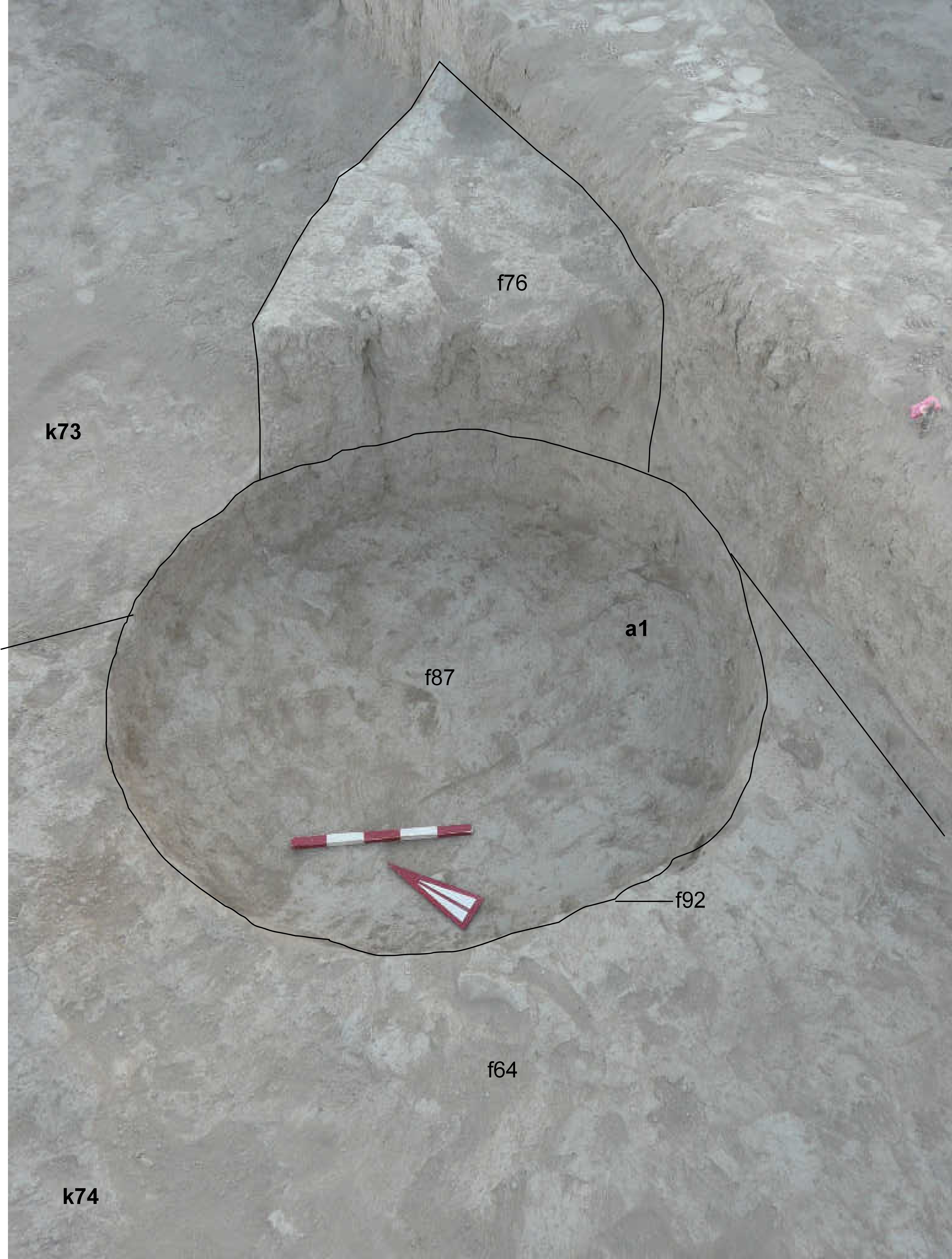
| f87 | Fill of a small round pit f92 cutting the brickfall. The pit was filled with a soft and fine brown reddish soil with pottery sherds. | - |
 |
| f142 | Fill of pit f122. The soil was soft, grey and ashy with several almost horizontal layers. It contained a large quantity of sherds, some complete vessels and animal bones | Small jar i11, seal impression q231.2, sealing i12. | 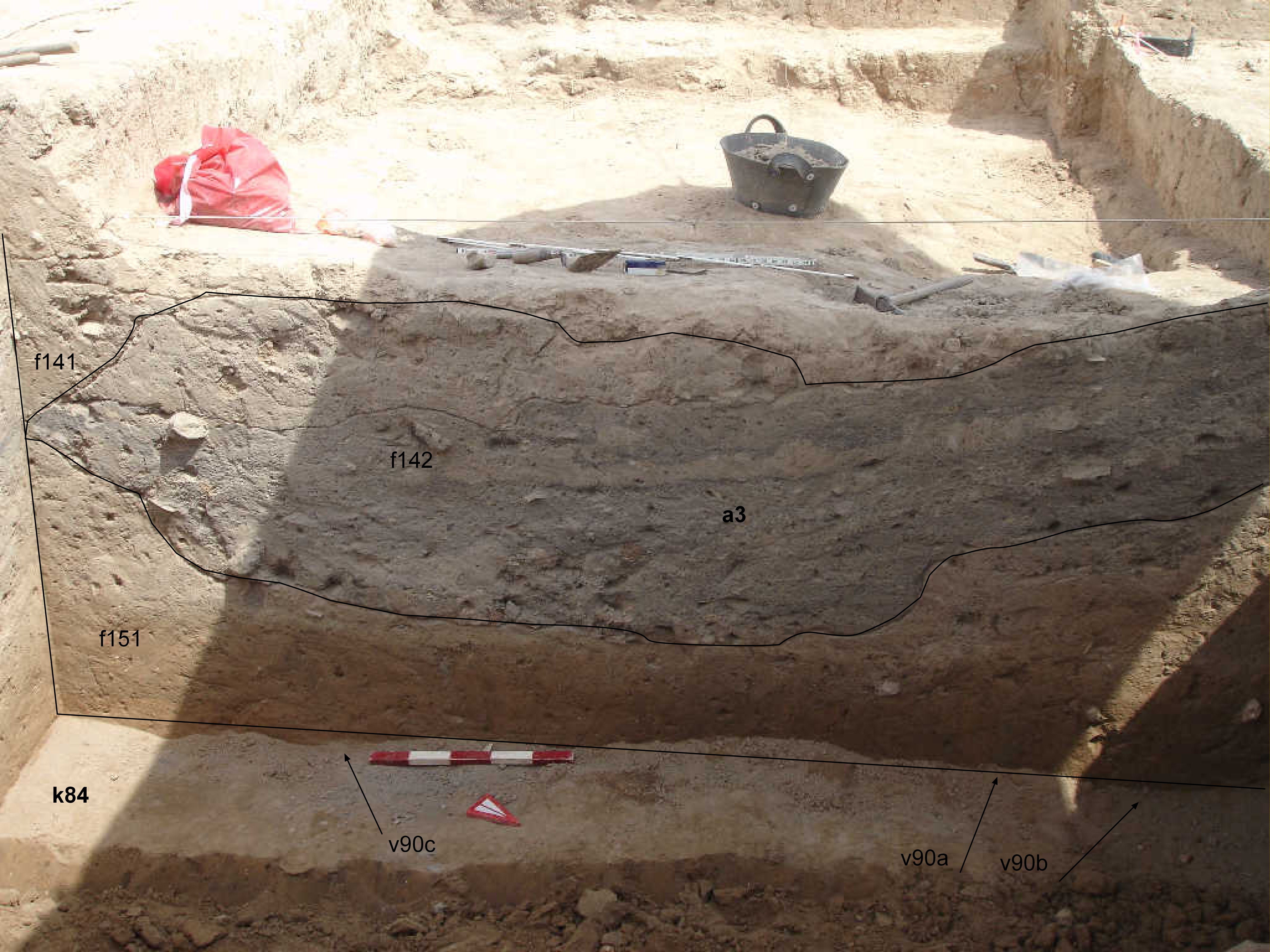 |
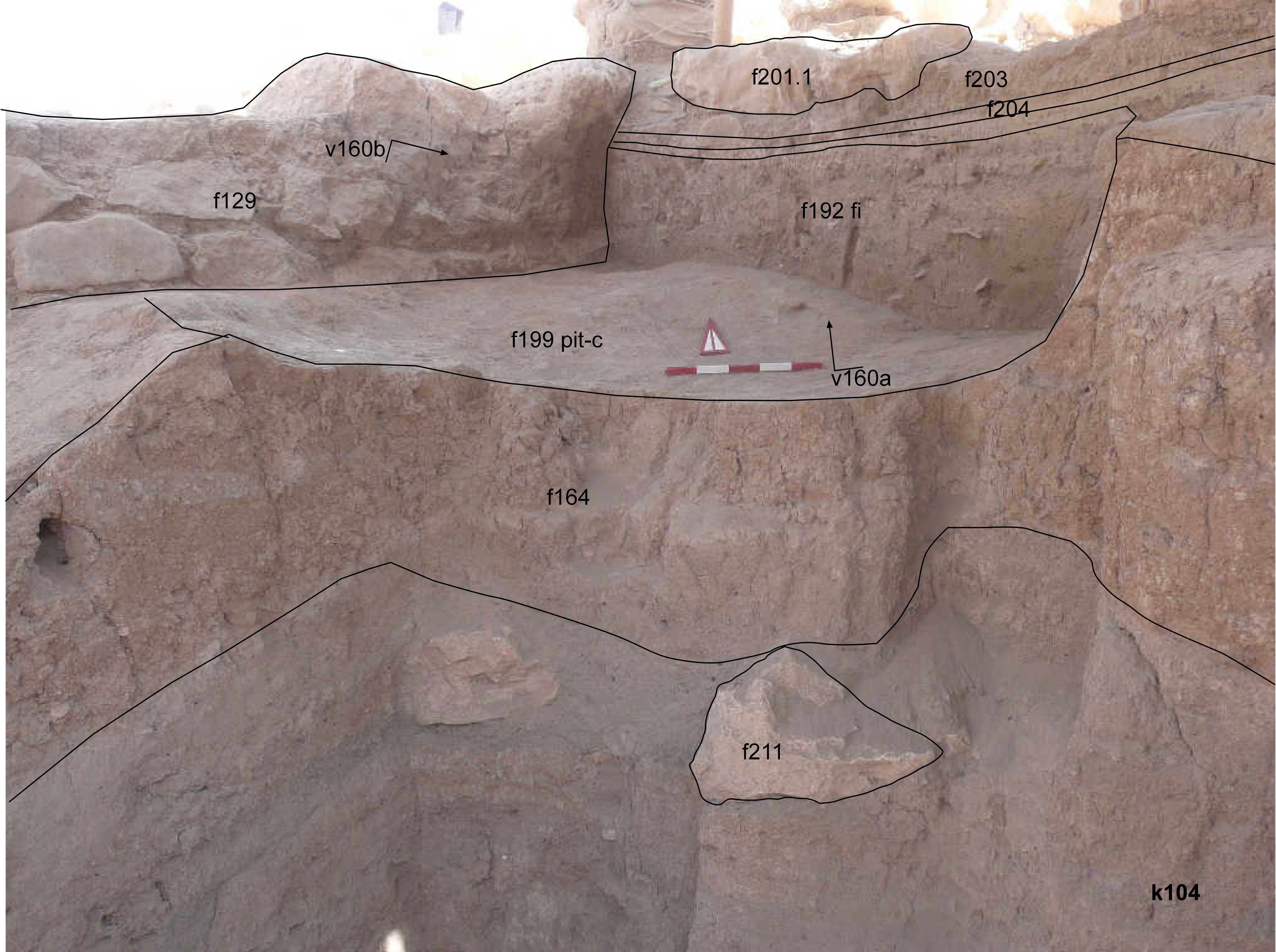
| f192 | The large pit f199 was filled with different layers of reddish brown, brown and gray soil. The soil was soft and sligtly wet and ashy. The soil contained a proper amount of carbon, animal bones, a broken tannur f220, a large amount of pottery, roofing material, bricks, kilin waste, lithic and clay artefacts. Pit f282 removed the northern portion of the fill. | animal figurine q304.7, bead q333.1 | , shell q389.10
 |
| f282 | The fill of cut f283 is similar to fill f192. It consists of a brown wet soil with some roofing material, tannur pieces and some pottery sherds. | - | 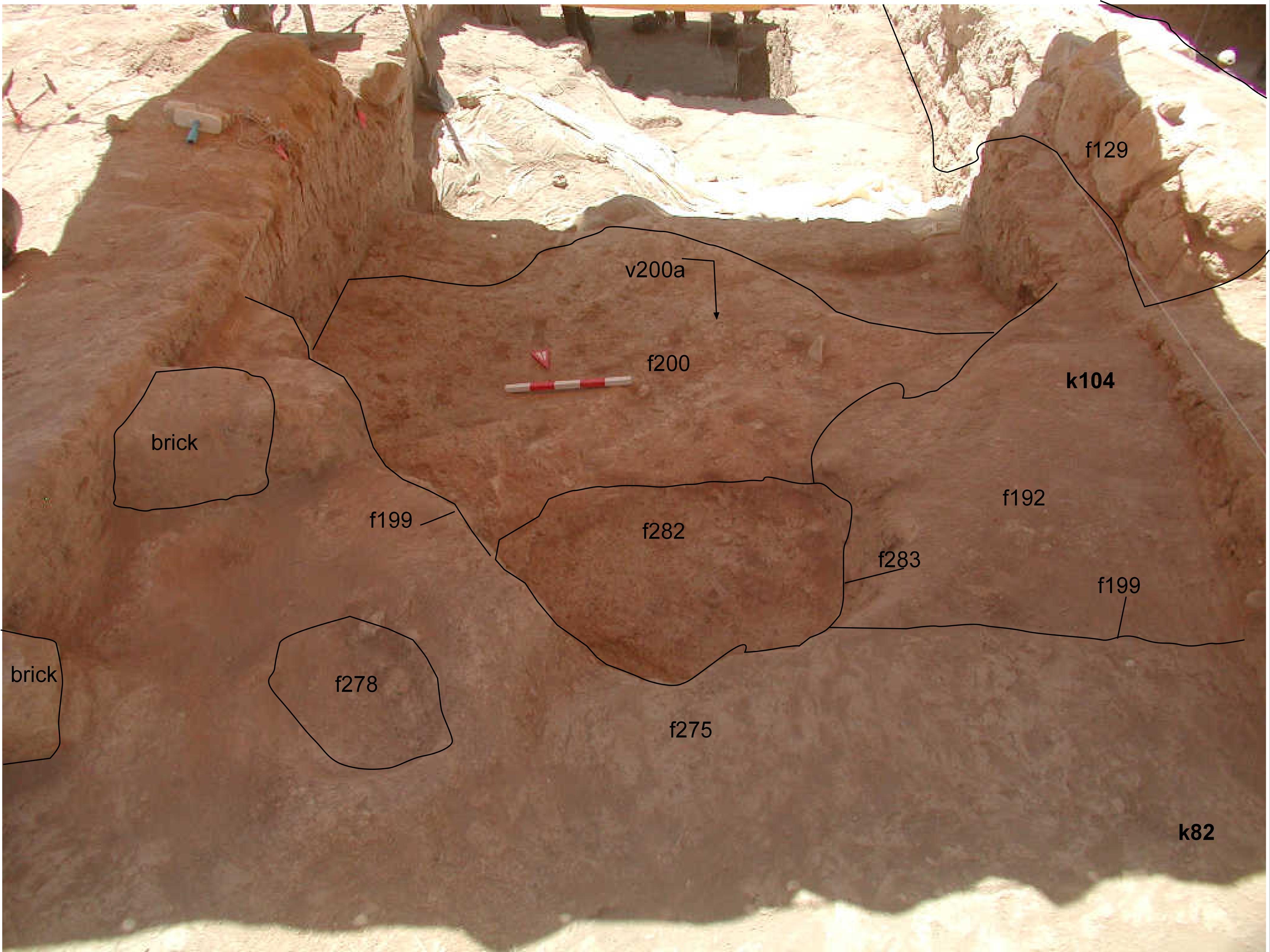 |
Back to top: Amorphous amassment
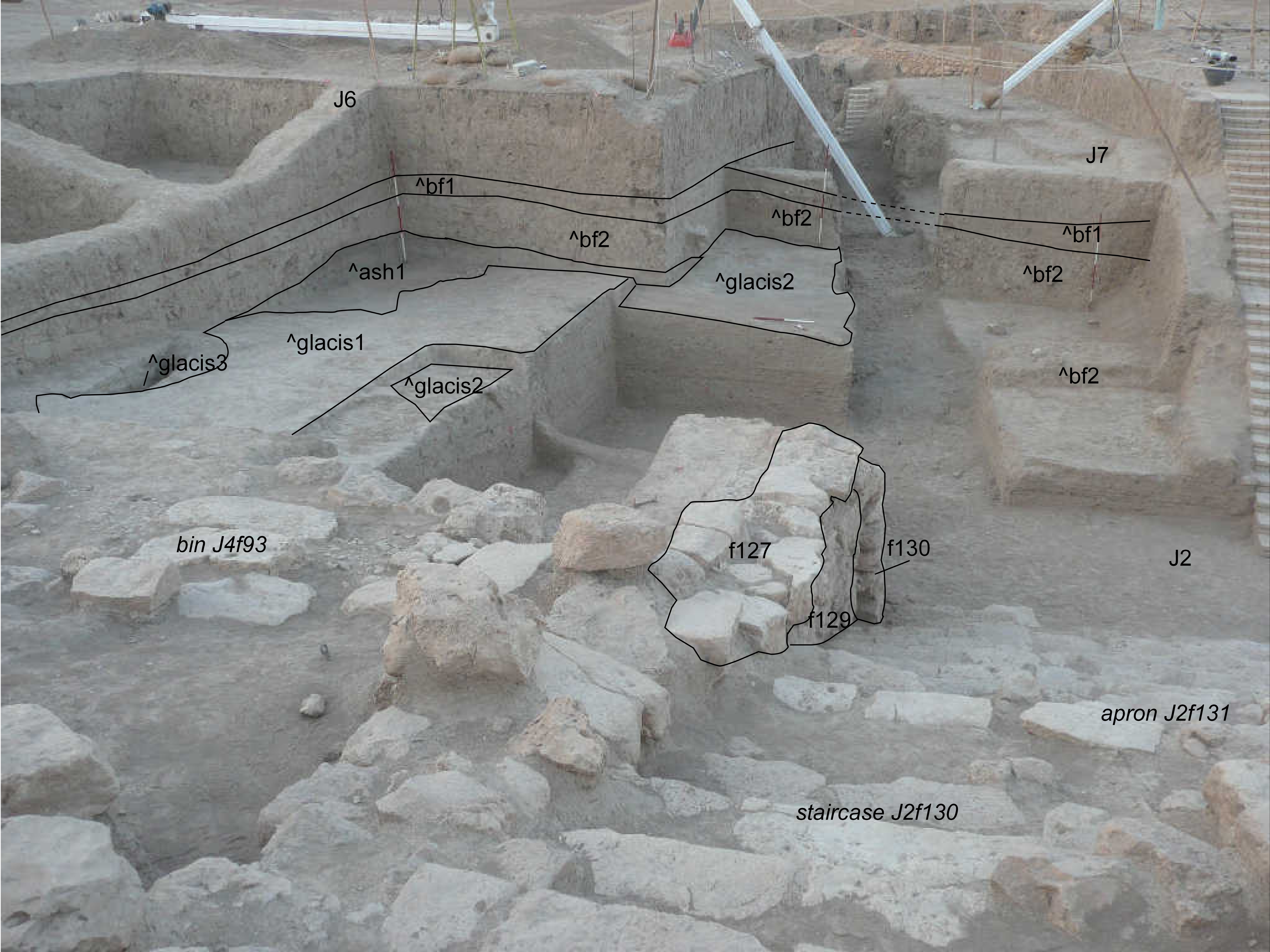
Collapse
 |
Back to top: Amorphous amassment