Back to top: Disentangling the matrix
Archaeology at the core
|
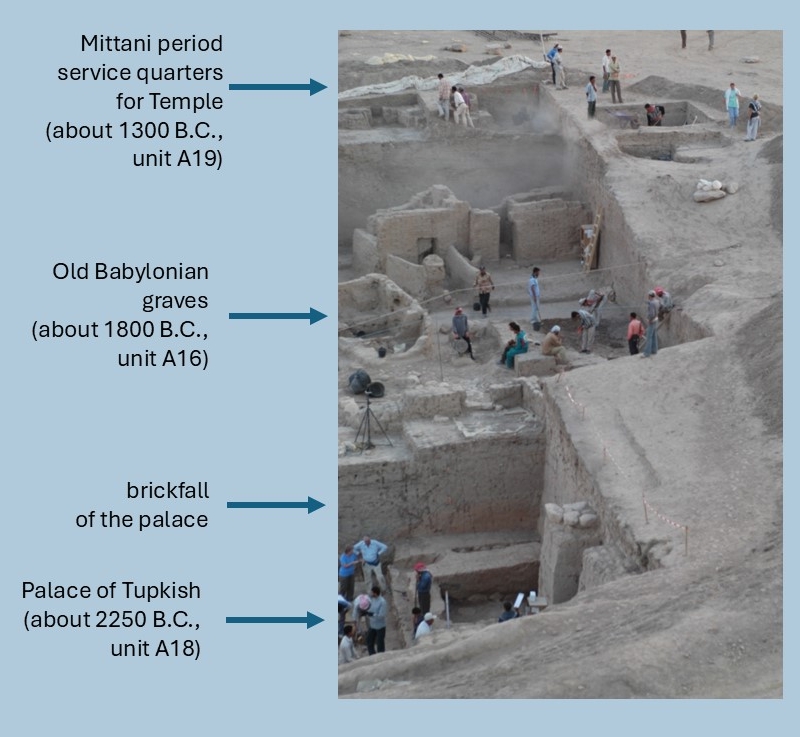
These two images illustrate the complexity of the process which we call "disentangling." The image to the right shows the vastity of the data embedded in the soil, with a succession of strata some 20 meters in height, corresponding to a time period of some 10 centuries. The image below highlights the contrast between the overall scope of the excavation and the fragmented nature of the elements found in the matrix.  |
 |
Back to top: Disentangling the matrix
The grammatical approach
Epistemics gives us the tools for translating the complex physical record into a “known” referential record.
| As with the rest of the grammar, our approach rests on the three venues of process, context an method – which are briefly described below with regard to stratigraphy. |
| |||||||||||
Back to top: Disentangling the matrix
Data: the matrix, an amorphous mass
When approaching a set of cultural remains that have been abandoned and have collapsed over time, we face an amorphous matrix, a congeries of loose material and discrete fragments that came to rest there as the result of multiple cultural and natural forces, and often over very long periods of time.
Two aspects are particularly in evidence.
- The loose material, while amorphous in terms of an overall sense of consistency, exhibits nevertheless some basic spatial arrangement, such as horizontal layering or vertical cuts.
- Individual elements stand out as discrete items within the loose matrix that envelops them.
|
The two sections in the attached images illustrate both aspects. The image below shows a compact soil matrix with individual stones and bricks, and with the impression of other elements that have been removed. The image to the right shows a longer sequence, with a distinctive layering, the lower layers indicating the presence of regular accumulations. 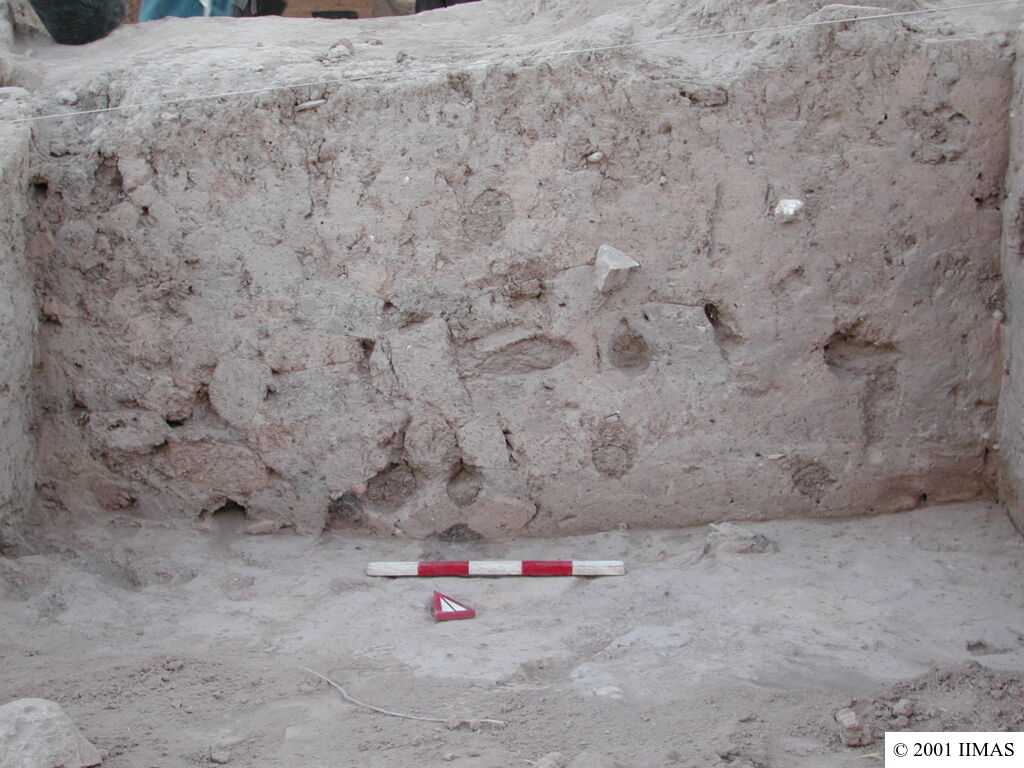 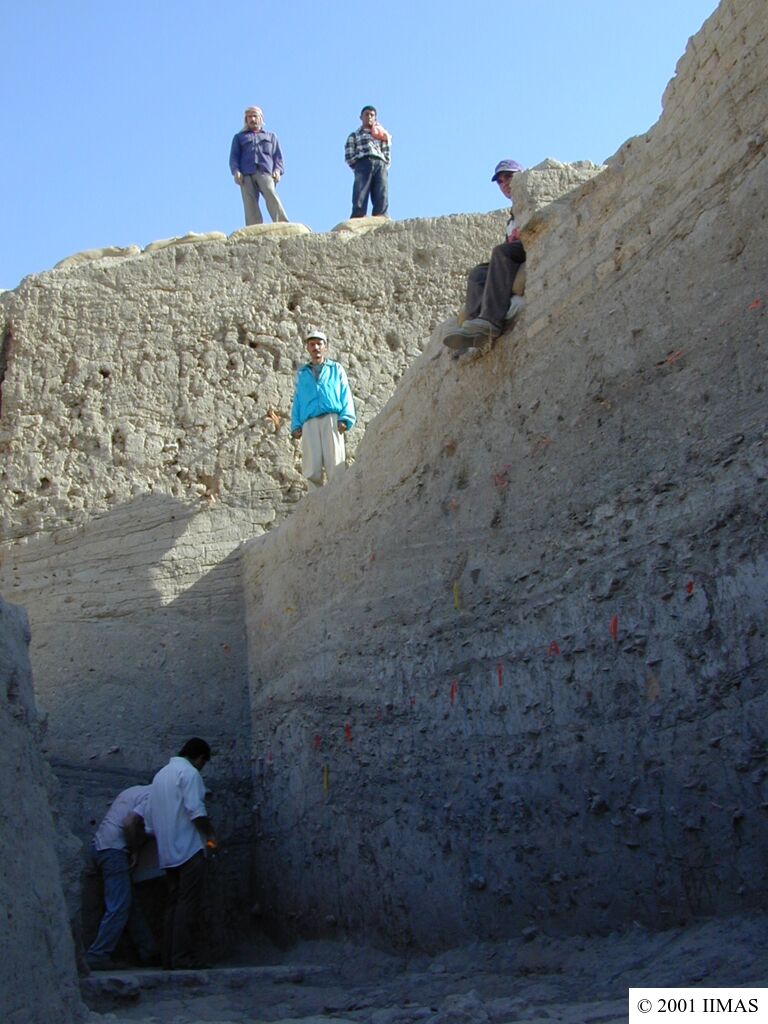 |
A Mesopotamian site like Urkesh is a prime example of this: the collapse process took place over many centuries, and it was a dynamic process which went well beyond simple superposition and resulted from a variety of accretions, intrusions and re-uses. The Arabic word tell, as in “tell Mozan,” and the Kurdish word gir as in “girê Moza,” refer precisely to a hill that is made up of cultural remains.
Back to top: Disentangling the matrix
Process: disentangling
Excavation is the process through which we “disentangle”1 the matrix.
One approach is to extract what are perceived to be important elements within the matrix, without regard for the context. This is a non-archaeological excavation.
A properly archaeological excavation aims to understand and document the way in which every element lays in the ground and then infer from their emplacement how they had come to be where they are, and what their original function was.
This is the one epistemic process that is exclusively found in archaeology. Stratigraphic analysis of cultural deposits is a method that is proper to no other discipline.
Back to top: Disentangling the matrix
Method: stratigraphic analysis
A fundamental aspect of stratigraphic analysis is the attention that must be paid not only to the elements in themselves, but to the types on contact that they have in the ground, because this is what leads us to infer from their correlation in space their correlation in time.
The book on stratigraphy edited by Catuneanu (2026), while not dealing with archaeology, offers many insights into the importance of correlation in stratigraphic analysis. The authors stress the significance of bounding structures, especially unconformities and discontinuities, in providing evidence for the sequential correlation among the elements.
In the archaeological record, this corresponds to the identification of both the elements and the types of contact they exhibit, which is at the core of stratigraphic analysis.
Back to top: Disentangling the matrix
Notes
1^ The term “entanglement” has recently come to have a specific meaning in archaeology (Jones 2021; Buccellati 2022 Entanglment): it refers to the relationship between humans and things. The meaning that applies here is different. It refers to how things are entangled in the soil as a result of a depositional process that was, to a large extent, not intentional.
Back to top: Disentangling the matrix