| image with walls covered -- but see under epistemics intro |
Having isolated, though stratigraphy, the primary data as found in the matrix of the soil, and having, through typological and integrative analysis, reaggregated the finds into broader classes, at both the intra- and the extra-referential level, one must proceed with a restructuring of what is left standing, a re-structuring that is both physical and descriptive:
- conservation addresses the remains in their physical consistency: this pertains to both the elements of the built environment that are left standing and to the object that have been extracted and stored;
- presentation offers an explanation of the same remains, an explanation that is addressed to both scholars and occasional visitors.
This effort is an essential part of the Grammar because both standing structures and objects are part of the excavator’s task to offer a full documentation. The data are the remaining witnesses of the operation that has brought them to light, and they ought to be preserved as such. The ecavator’s contribution is a fundamental moment in this process.
As an author, the excavator, generally the unit director, must provide a statement, however brief, of the work done. The conservator and the presentation specialist will in addition provide here their technical comment. As example, see
In standard practice, such concerns are not a factor in the excavation process, except perhaps for items that are immediately felt to be of great importance. A grammatical approach aims instead to channel attention to the need for preservation at the very moment that an element is exposed: the excavator is prompted to state how the preservation concern has been present in the determination of the disposition of any particular element, and how the process may be explained to those who confront physically the remains.
Back to top: Introduction: the selected whole
Context: selection
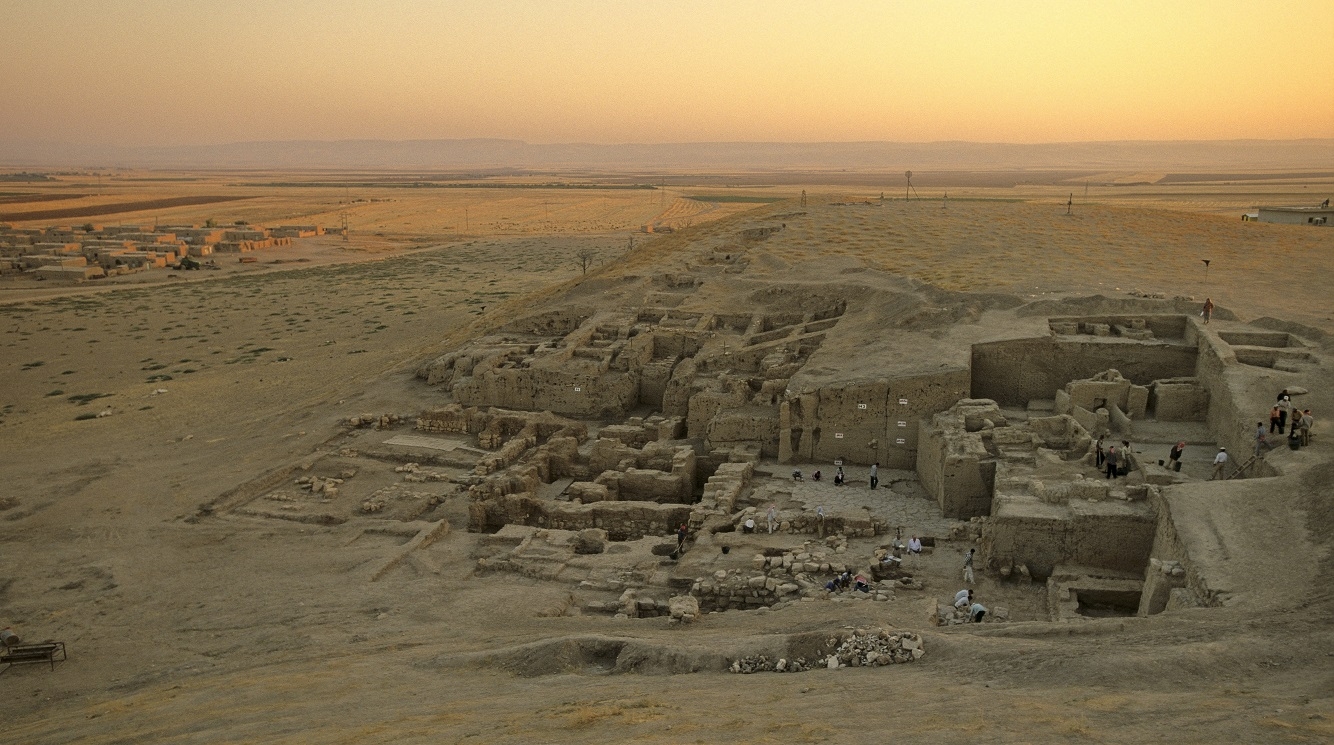
Excavation entails by necessity the need to sacrifice certain elements in order to expose others. Only a selection of the stationary elements in the grounds, essentially walls and permanent features, is not removed.
As a result, there is a given “whole” (in the case of Urkesh, the Palace, the Temple, the abi) that remains unexcavated and stands as a permanent witness of what has been excavated.
Back to top: Introduction: the selected whole
Method: re-structuring
This “whole” is in its original setting, but is mostly in a ruined state, and in any case, without any of its original urban context. This leads by necessity to a re-structuring of what is preserved, for which two systems are required.
Back to top: Introduction: the selected whole
Systems: cons. & pres.
Conservation. – What is not sacrificed must be immediately conserved in order to avoid its deterioration.
It is for these reasons that archaeological conservation must be inscribed in the excavation strategy, and is therefore part of the grammar. One must indicate the reasons behind the determination regarding the disposition of any given element so as to make explicit the nature of the conservation process.
Presentation. – The process of preservation must keep an audience in mind since the very moment of excavation.
The process of site presentation acts as the converse of a museum approach: at the site, because we have the context and not the objects. So it is for the excavator to provide the description of the objects found at any given “whole” (e. g. The service wing of AP).
Back to top: Introduction: the selected whole
The role of Museums
Museums play a major role in the re-structuring phase: in this case, it is movable items that are singled out and placed on view as individual “selected wholes.” These items are handed over by the archeologist to the curator, and thus our grammar has no direct bearing on the final disposition of these items.
There is, however, an important dimension that our grammar plays, and that is to provide the full details of each and every object brought to the Museum. There is thus no problem of the type Museum face when they must go through their archival records to know about provenance and original context of the objects in their care.
Back to top: Introduction: the selected whole