Back to top: Referentiality NOW TO GRAMMAR
The concept
The three steps of the process of recovery may be seen in terms of referentiality. Each element, as excavated today, is frozen in a matrix that does not refer the life the element had when in use. This “reference” is what archaeology aims to recapture. And the three steps of the process of recovery we have outlined in the preceding section may be seen in this perspective as follows.
Back to top: Referentiality NOW TO GRAMMAR
1. Categorization: no referentiality
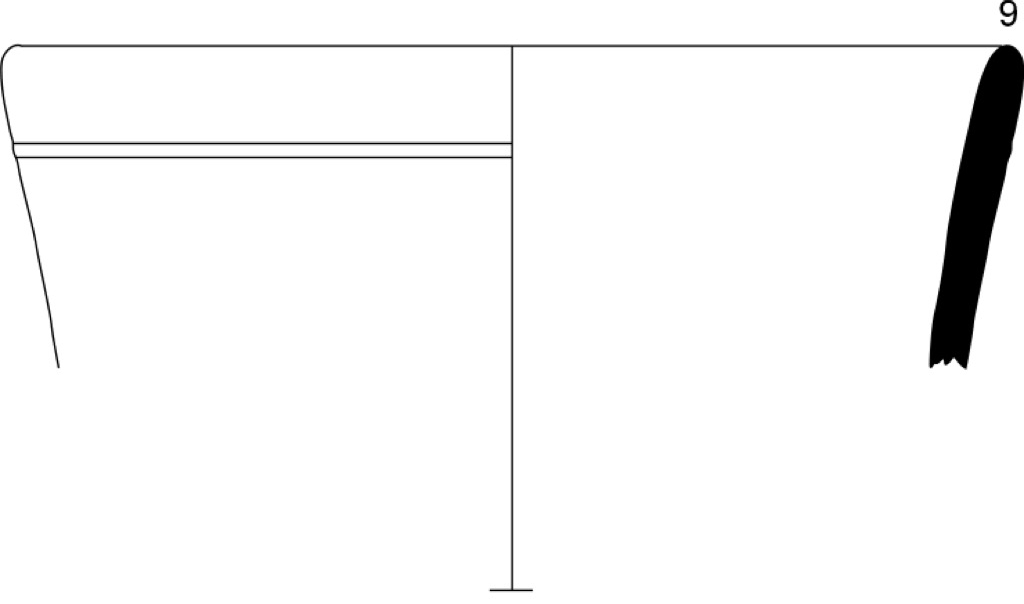
| The grammar operates on criteria that are not assumed to reflect categories operative for the ancients. For example, the color of a ceramic sherd, its ware, its dimensions are defined by our grammar with categories that are extraneous to the ancient mindset: the Munsell color system, a chemical definition, the metric scale. This does not obviously mean that the ancients had no awareness of color, ware and dimensions; only that our "grammar" is structurally different. It operates on the basis of a codification system (for colors), chemical principles (for wares), metrical precision (for dimensions) that are all extraneous to the very mindset of the ancients, and do not take that mindset into account.
| A16q704-p6
| 
|
Back to top: Referentiality NOW TO GRAMMAR
2. Semiotics: object referentiality
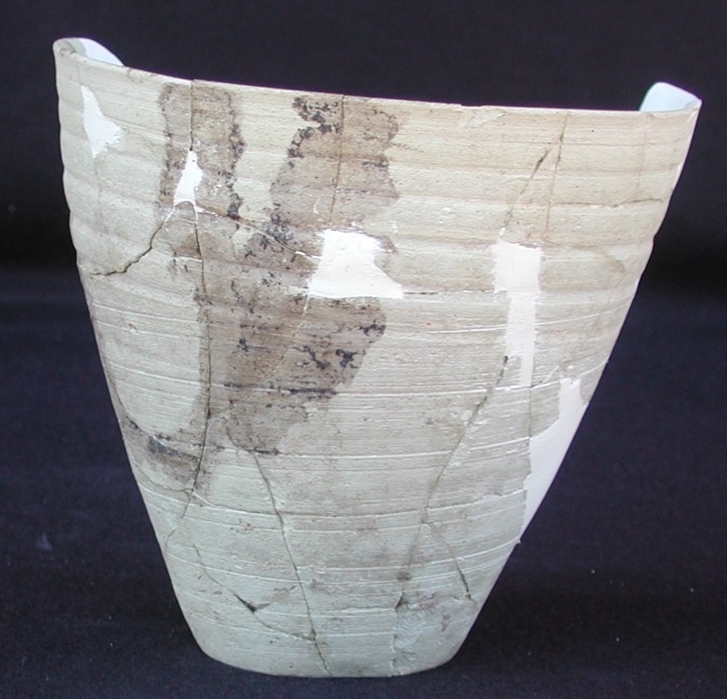
| We can hold in one hand a whole ceramic object like the one shown on the right, we can pour liquid in it and drink from it. These inferences may be regarded as obvious, and are formulated as soon as the cup appears – including our term "cup" which is already referential, and thus "semiotic" in nature. The object is referentially present to us as it was to the ancients, and in this case the language equivalence (e. g., Akkadian kāsu ~ English "cup") applies properly.
| A14.119
| 
|
Back to top: Referentiality NOW TO GRAMMAR
3. Hermeneutics: subject referentiality
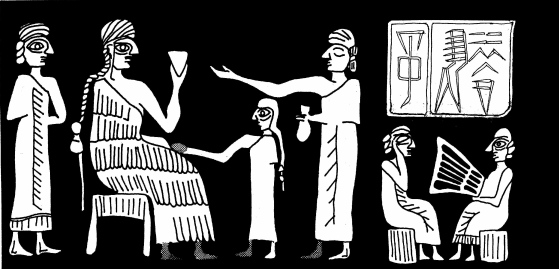
| What emotional response would the object evoke in the subject holding it? Two seal impressions give us a clue: a cup is held in one hand by the king in one case and by the queen in the other, in a scene that indicates conviviality but points also to a special celebratory atmosphere. This takes us closer to the perception that the ancients had of this item – being used for ceremonial occasions, when the cup acquired a special meaning, to the point of being rendered several times on the seals of queen Uqnitum.
|
TGL^qu2
TGL^qu4
| 
|
Back to top: Referentiality NOW TO GRAMMAR
-etic and -emic
The distinctions made above with regard to referentiality reflect in part the distinction between -etic and -emic approaches, where the latter implies a culture specific understanding and definition of phenomena, and the former does not (or rather, it is specific to our culture, not to the target culture). See articles.
Back to top: Referentiality NOW TO GRAMMAR