Back to top: Phase 3m-JP - Early Dynastic III
Stratigraphy
here comes the Phase plan
This is a long phase in the plaza. The monumental staircase and revetment wall were built at the beginning of this phase. The plaza itself was kept relatively clean and few floors were laied in front of the monumental staircase and revetment wall. The plaza had the shape of a shallow bowl, where in the eastern part the level of the floors slope from northeast to southwest, away from the steps of the staircase. To the western end of the plaza, the slope is west-east, so that the plaza center was at deepest in term of elevation.
The first floor associated with the lowest visible step of the apron1 and the row of stones under stair2 is a very well defined surface, documented both in section and in plan. The floor consists of a compact gray layer incorporating small pebbles and ceramic sherds.
The row of stones under the first step may represent either:
1. the continuation of the step of apron1
2. a step of stair1
3. stair1 represents the first three steps of apron1
In section constructional are the arguments for the two options. |
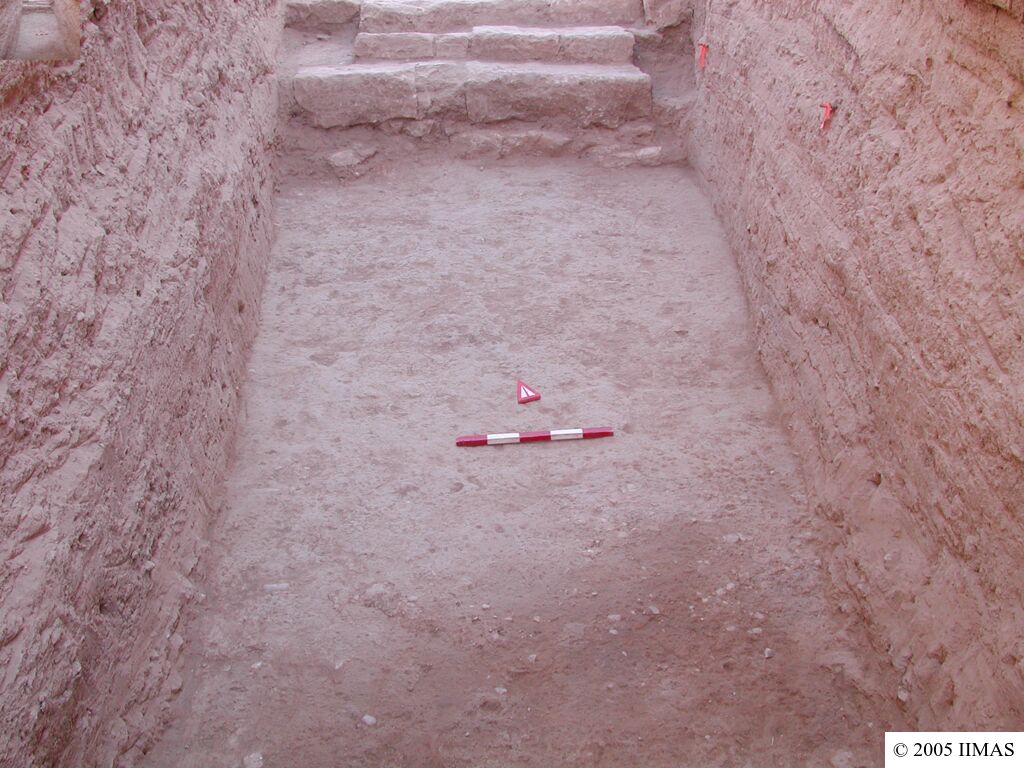
floor1 |
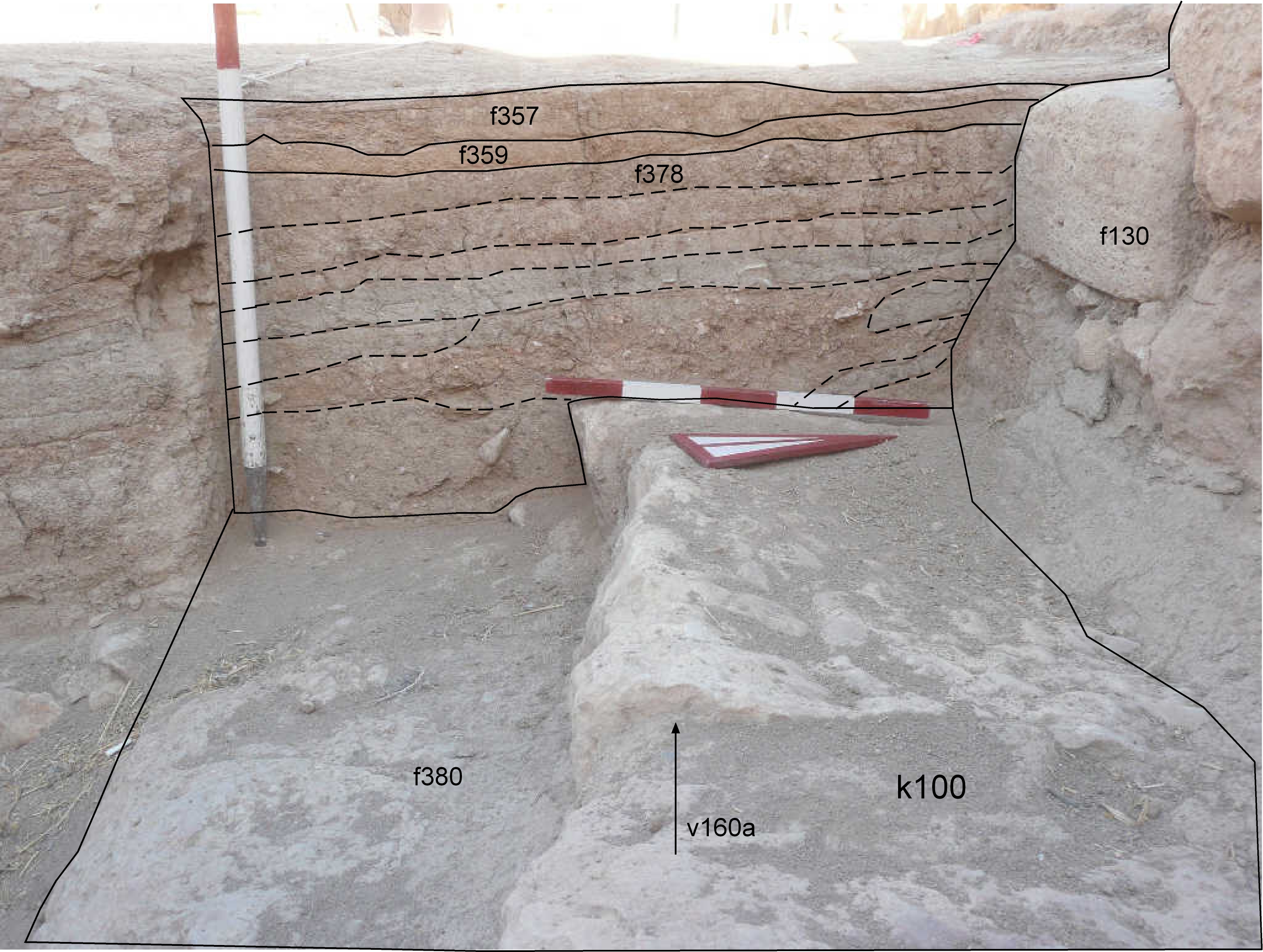
west section J2k100 |
|
The revetment wall was visible along its entire height. Its lower courses were protected in the western curve by the stone escarpment, whereas the remaining portion, extending as far as the monumental staircase, was built of clay. Its surface sloped southward toward the plaza. |

earth escarpment in J1 |

earth escarpment in J2 |
To the east of the monumental staircase, the ground level is of some meters higher than in the Plaza. This difference in elevation results from the deliberate laying of succesive layers of material south of walls 1 and 3. These layers were intended to protect the bases of the walls and followed the underliyng slope of the mound.
The first of these layers, referred here as glacis, is a compact layer (glacis1) with a pronounced southeastward slope.
At the end of this phase, a dump containing an amount of early EDIII pottery (dump) was deposited over wall3 and glacis1 and abutted wall2.
|
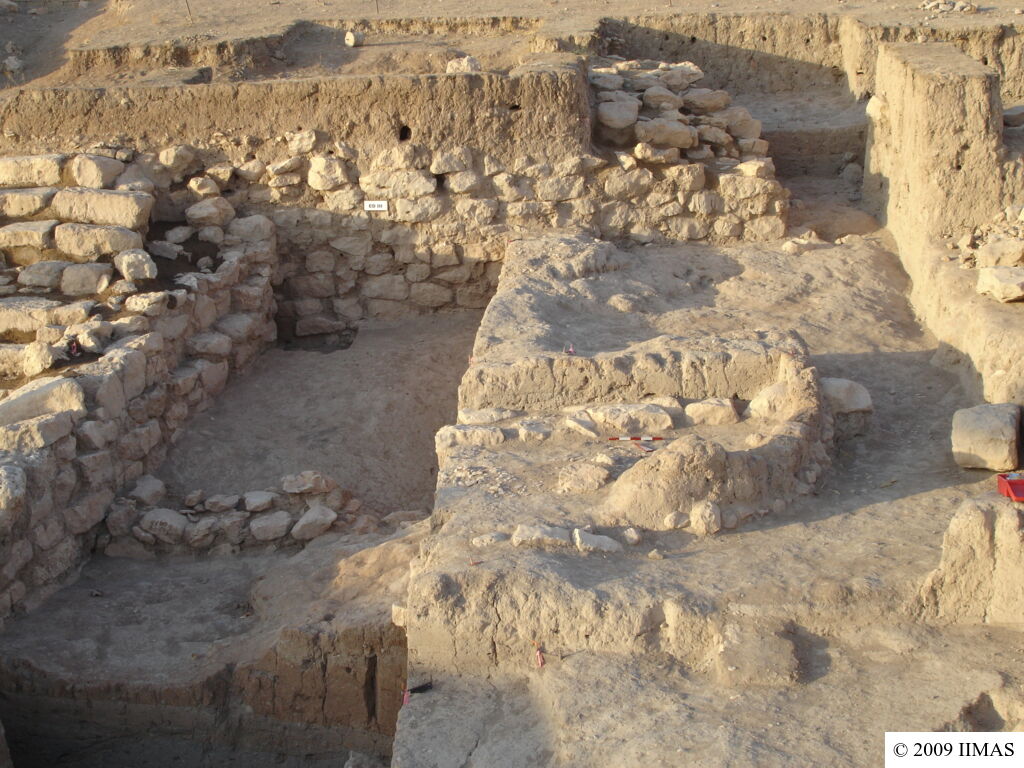
glacis in J6 |

dump in J6 |
Back to top: Phase 3m-JP - Early Dynastic III