| Unit |
Regular loci |
Special Loci |
Total number |
Image |
| J1 |
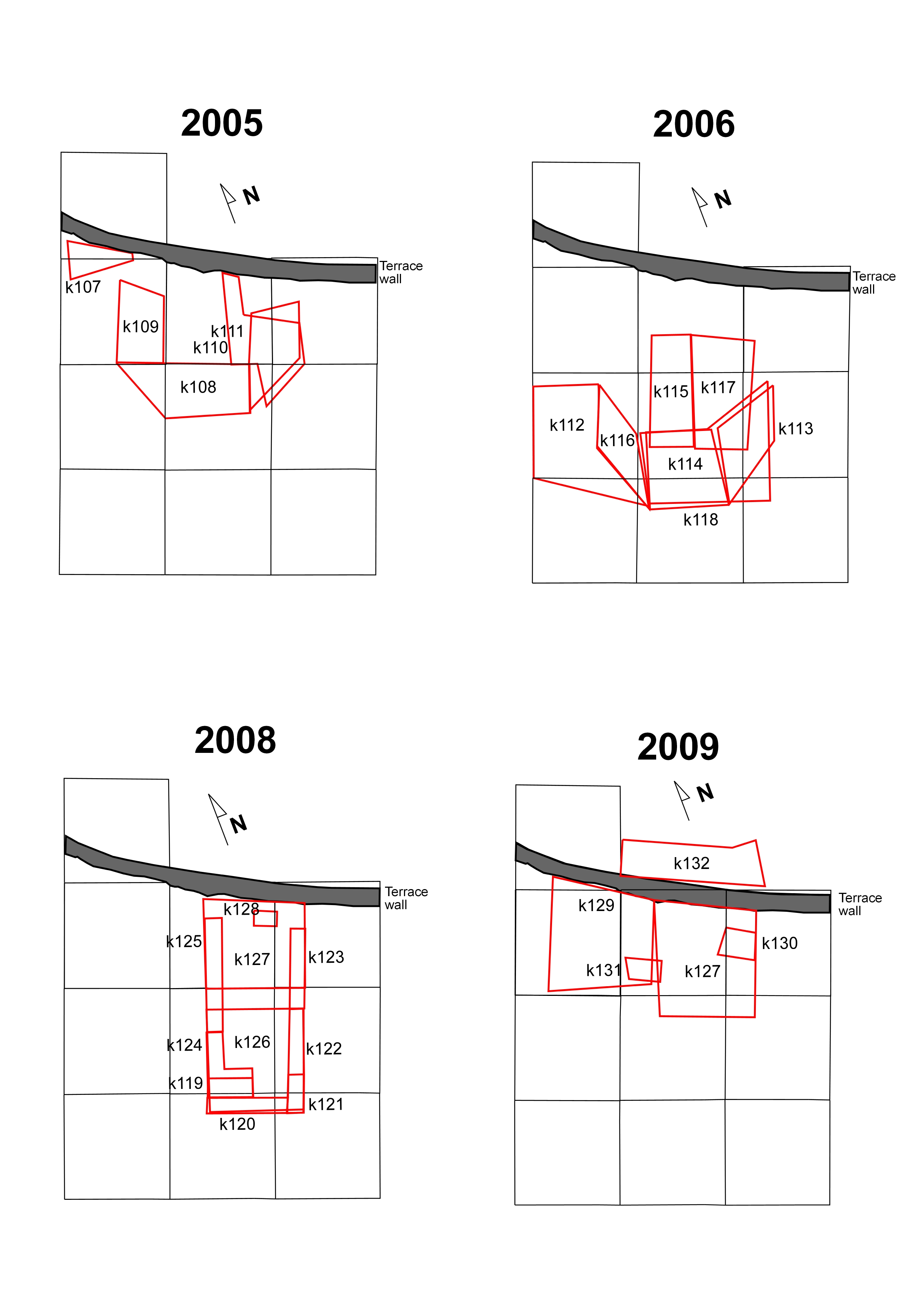
J1 is constituted of a very extended area, counting about 19 regular (5x5 m) squares (loci). 4 loci belong to the first season and have been inglobed in the new oriented grid (Chronicle). 5 loci have been included in J5 since 2008. 4 loci (k7, k9, k10, k11) were used during the first excavation season (2003)and oriented following the North, and all the other loci following the orientation of the Temple Terrace. The regular loci have been used only during 2003-2006 excavation, then the deepness of the excavation required to re-modell the J1 area for safety reasons, in a theatre shape, where only new special loci were used. The regular loci (k7, k9, k10, k11) have been used in 2003, while loci k2-k41 between 2005 and 2006. |
2005 season the theatre shape of the excavation unit started to be set up. At the beginning the squares were located next to the revetment wall because the goal was to reach the level of the Plaza close to it (k107-k111). From 2006 it was started to enlarge the area because we tried to give the ancient perception of the wall and the terrace from a slightly bigger distance (k112-k118). In 2008 the excavation was concentrated at the bottom of the wall to look for the construction of the escarpments and to check eventual earlier levels (k119-k128). After the recovery of the stucture in k128, the 2009 season looked for the earlier structure and the possible LC mound(k127-k132). |
46 loci?? |
  |
| J2 |
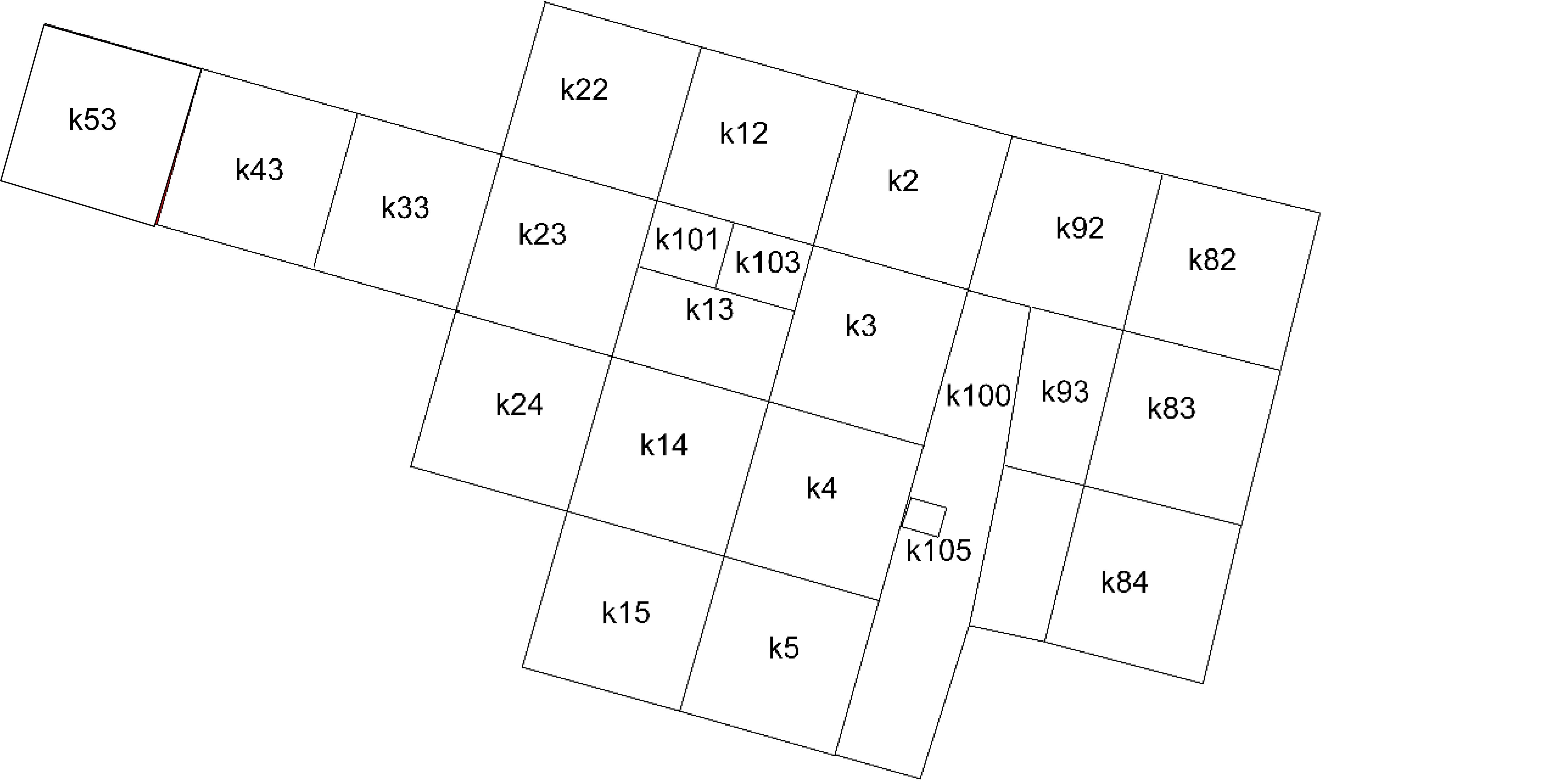
There were 20 main squares in J2 when it was begun in 2004. In subsequent years some loci were reassigned to other excavation units. The main excavation loci of J2 then remained k2, k3, k4, k5, k12, k13, k14, k15. The loci were distributed to achieve a maximum exposure of the staircase, apron and revetment wall. Some were eventually subsumed under other units (k33, k43, k53 and k54 in Unit J3; k92, k82, k83, k84, k85 in unit J4 and J6) or were only shallow excavations. |
7 irregular special loci, k100 correspond to the position of the preexisting trench and k105 is a small sounding. K101 and k103 were created to have a stratigraphic control. K106 was created to built a cement staircase to acces J2 and k111 to include part of J7 into J2. |
32 loci over the course of 3 years of excavation |
 |
| J3 |
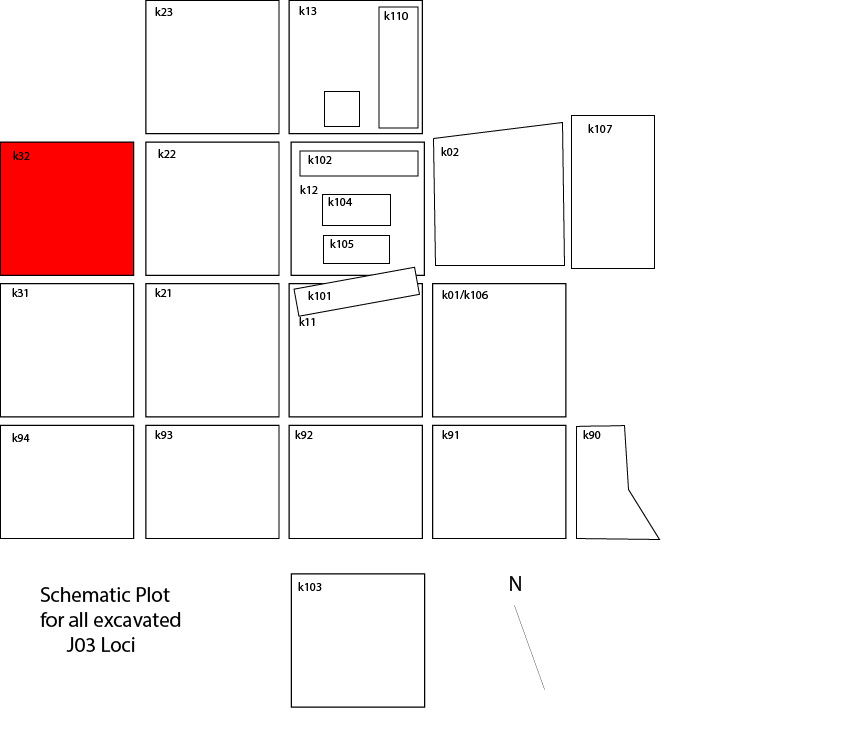
Eleven were regular 5m x 5m squares (k1, k2, k11, k12, k13, k21, k22, k23, k31, k32, and k103. Of the regular squares, three were first excavated in a previous season by unit J2 (k11, k21, and k31). Four were partial squares excavated to clear sightlines to the revetment wall and aprons (k90, k91, k92, k93, and k94). |
6 irregular loci. Loci k90, k91, k92, k93, and k94 are of irregular shape and were excavated to improve sightlines from a new viewing platform to the south. Special locus k110 was opened in the latter part of a study season M23(2010-U) to identify the source of a large quantity of Late Chalcolithic sherds found in the vicinity of the Early Dynastic glacis (f50 and f109). |
21 or 23 loci |
 |
| J4 |
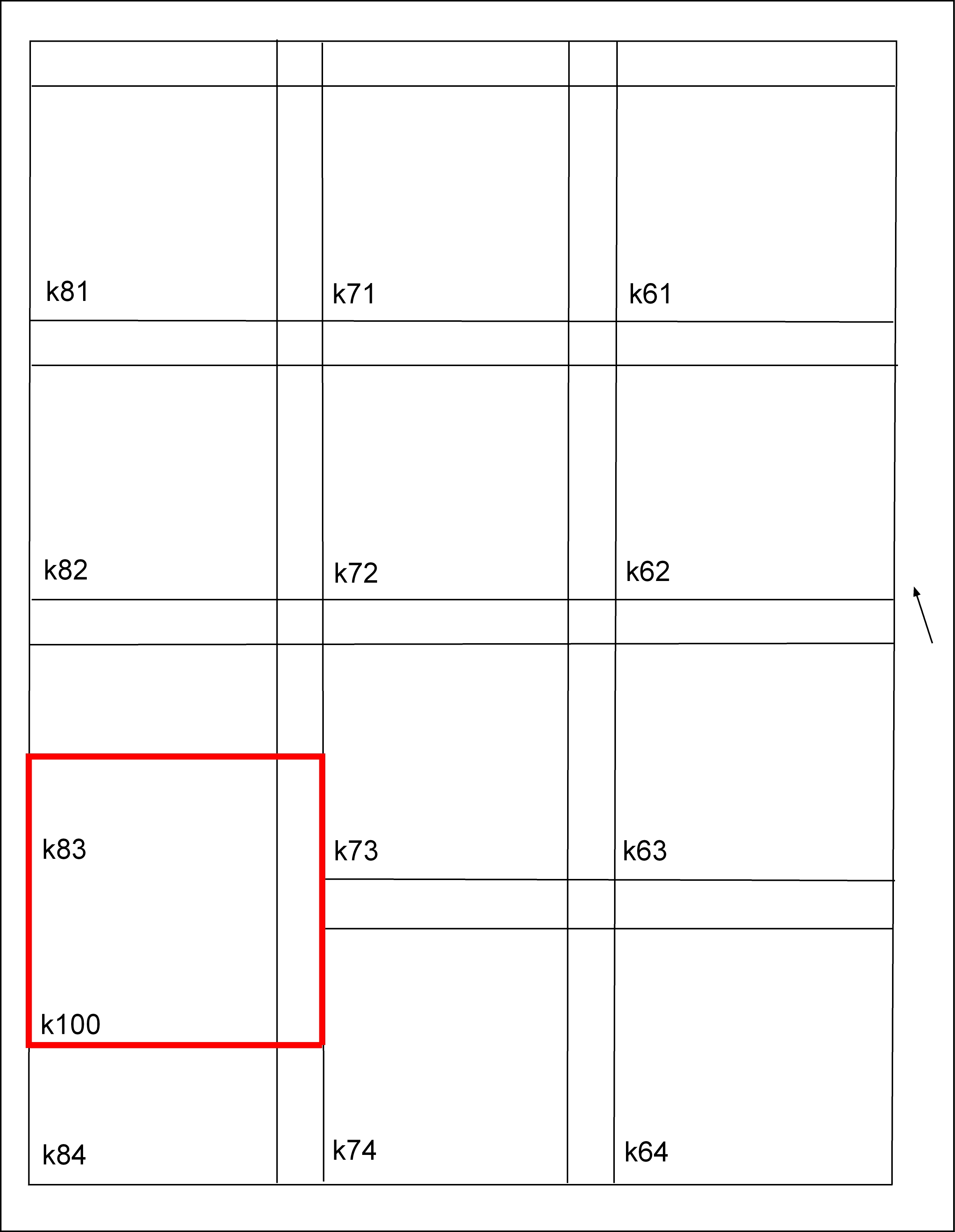
Out of the 18 loci that constitute unit J4, 13 loci were excavated during the season of 2006, k61, k62, k63, k64, k70, k71, k72, k73, k74, k80, k81, k82, k83, k84, k100. |
Only one irregular locus was introduced in order to investigate the continuation of the J2 apron in J4. To achieve that, the southern part of k83 and the northern part of k84, were excavated as k100. |
18 loci |
 |
| J5 |
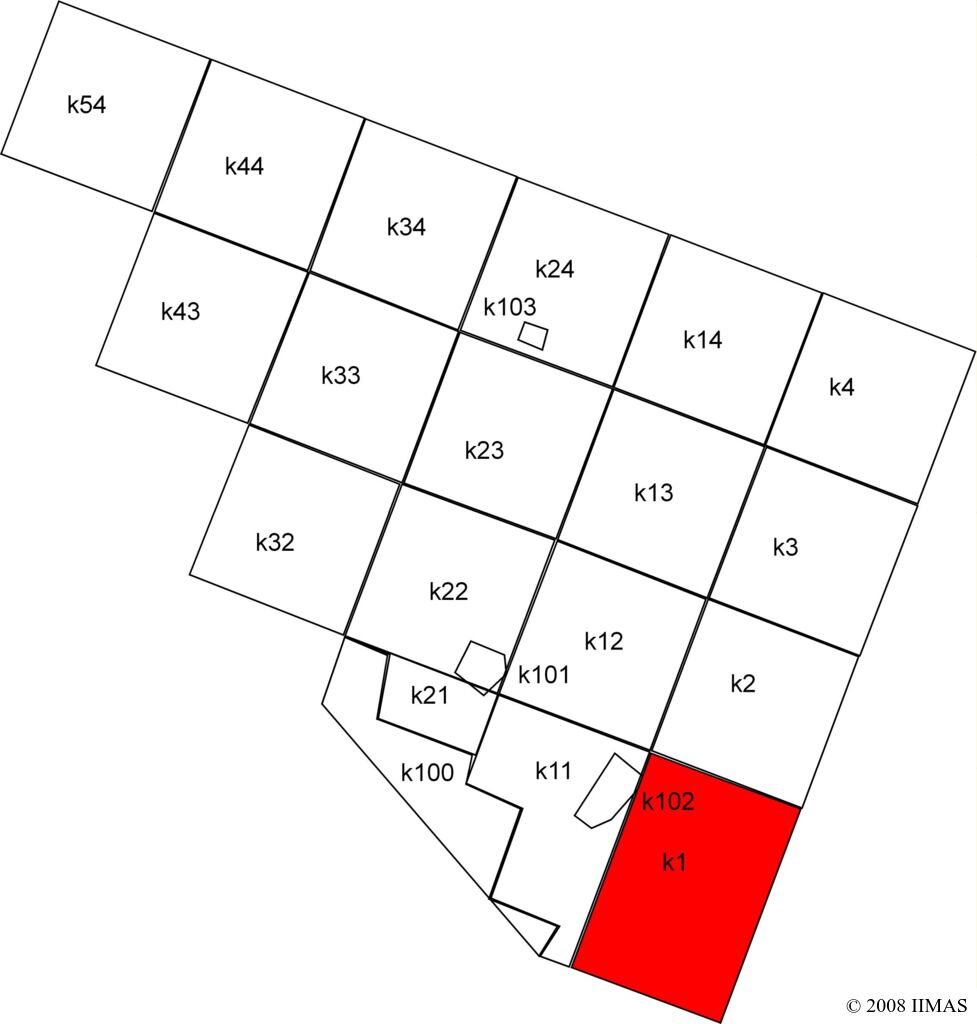
21 square loci (...) |
9 irregular loci |
30 loci |
 |
| J6 |
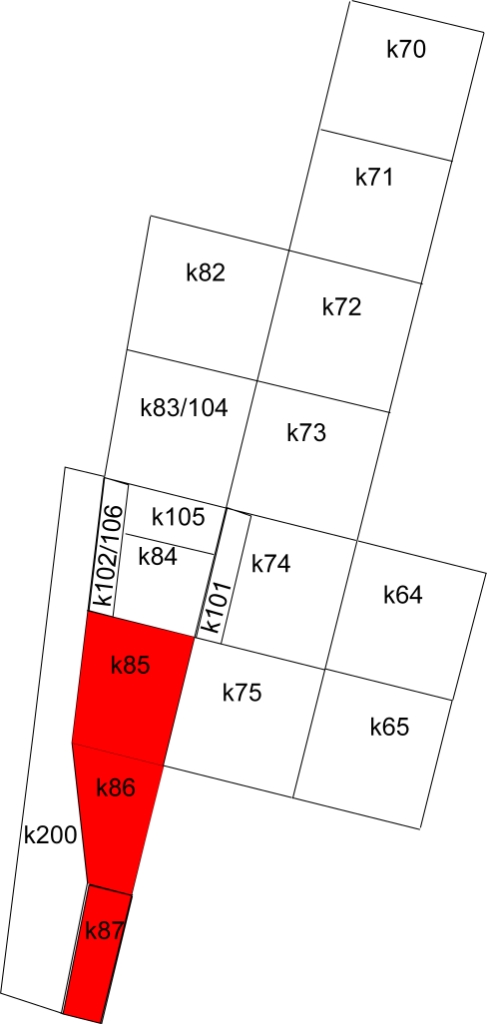
Nine regular 5x5m squares (k82, k83, k84, k70, k71, k72, k73, k74, k75, k64, k65) |
4 are irregular shaped and smaller in size loci (k85, k86, k87). A special locus is k200, which corresponds to the trench excavated by the German team in jears 1998-2002. Five smaller loci (k101, k102, k104, k105, k106) were opened within the regular loci to allow for smaller o deeper soundings.
| 22 loci |
 |
| J7 |
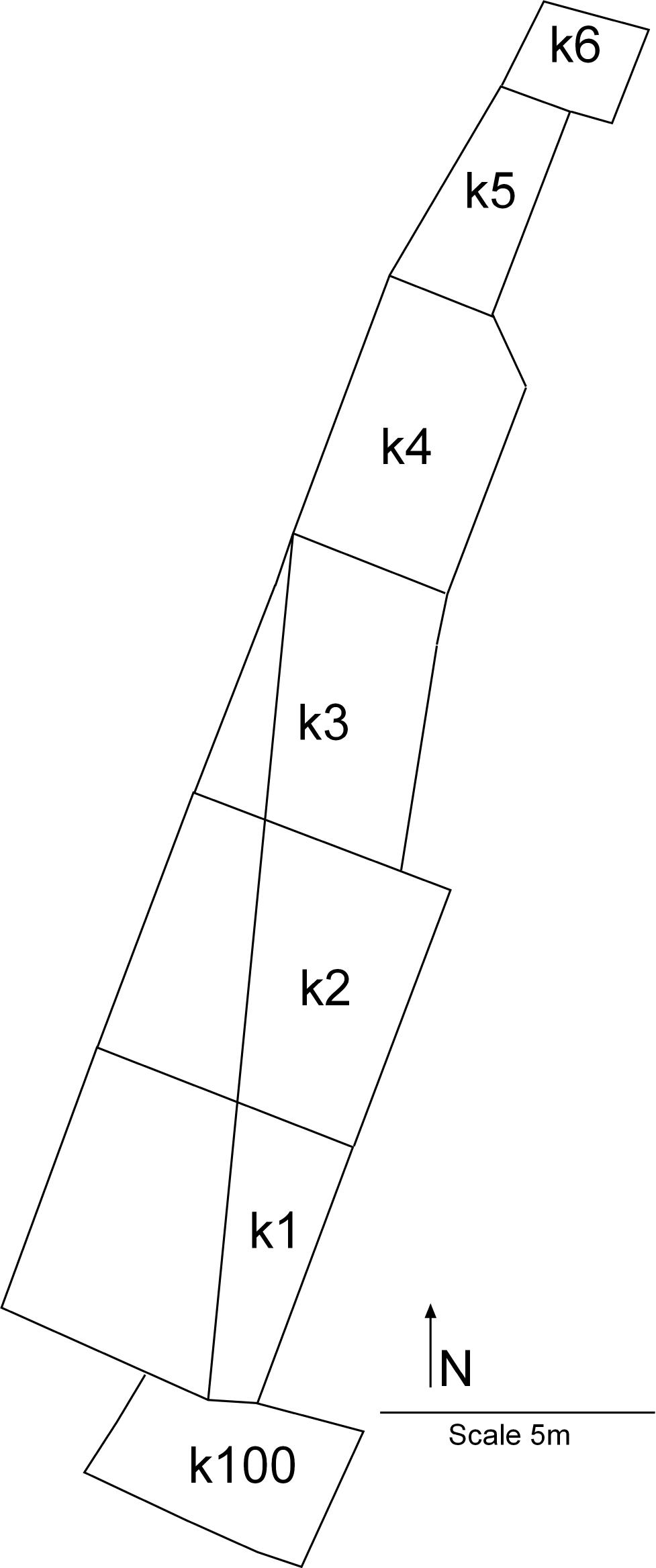
None of the J7 loci adhere to the 5x5 meter excavation squares that are usually used in the excavation, because the loci were arranged according to preexisting conditions. |
The loci were laid out according to the site grid using corner markers to delineate the western edge of the squares and using the trench, k200, as the eastern edge. This line formed the western edge of k4, however, in k1, k2, and k3 the western edge was cut on an oblique line to reduce the size of J7 and create an increasingly wide viewing area of the J2 staircase as one approaches from the south. |
8 loci |
 |